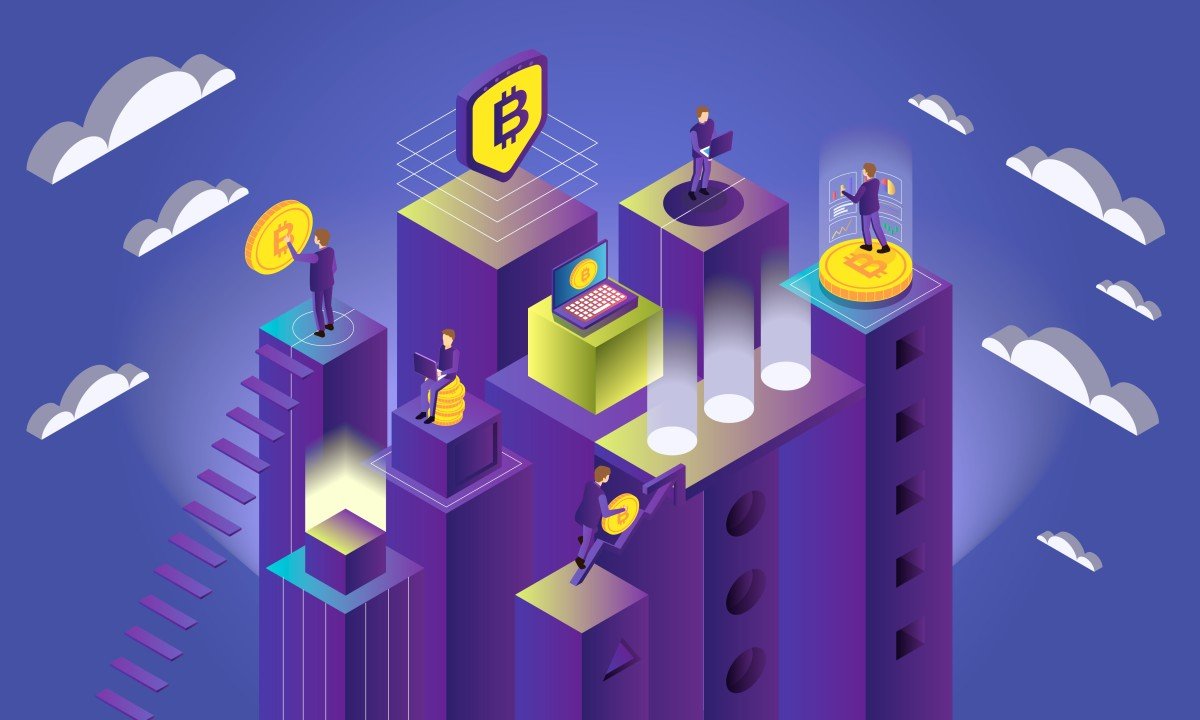

In recent years, blockchain technology has moved far beyond its initial association with cryptocurrencies like Bitcoin. As a decentralized and transparent ledger system, blockchain is now being recognized as a powerful tool that could redefine the future of software development. With its potential to enhance security, improve data transparency, and streamline processes, blockchain is poised to become a core component of modern software solutions across industries like finance, healthcare, supply chain, and even entertainment.
Understanding Blockchain Technology

At its core, blockchain is a distributed ledger technology (DLT) that records transactions across many computers in such a way that the registered transactions cannot be altered retroactively. Each “block” contains a list of transactions, and once verified, it’s linked to the previous block, forming a chain. This ensures the immutability and transparency of the data, as it is nearly impossible to tamper with a blockchain without disrupting the entire network.
The decentralized nature of blockchain means that there is no central authority controlling the data, making it more resilient to hacking, fraud, and manipulation. These attributes of blockchain are why software developers are looking at its potential to address various challenges in building secure, scalable, and reliable applications.
Enhancing Security and Trust
One of the biggest challenges in software development is ensuring the security of user data and the integrity of transactions. Traditional centralized systems store data in a single location, making them attractive targets for hackers. With blockchain, however, data is distributed across multiple nodes in the network, making it significantly harder to breach. Each transaction is cryptographically sealed, making it highly secure.
For developers, this presents an opportunity to create more secure applications that don’t rely on traditional security measures like passwords and centralized databases. Blockchain’s immutability ensures that once a transaction or data entry is made, it cannot be altered or erased, reducing the risks of data tampering, fraud, or unauthorized access.
Blockchain’s cryptographic protocols also help to establish trust in environments where multiple parties are involved. Smart contracts, for example, can automate and enforce agreements between parties without the need for intermediaries, reducing the chance of human error or dishonesty.
Decentralized Applications (DApps)
One of the most significant shifts in software development driven by blockchain is the rise of Decentralized Applications (DApps). Unlike traditional applications, which rely on centralized servers, DApps run on blockchain networks, meaning no single entity controls the application’s data or its logic.
DApps offer several advantages, including enhanced transparency, resilience against downtime, and the elimination of intermediaries. For instance, in finance, DApps are enabling decentralized finance (DeFi) platforms that allow users to trade, lend, and borrow money without going through banks or other financial institutions. In gaming, blockchain-based games allow players to own and trade in-game assets as NFTs (Non-Fungible Tokens), creating new economies within virtual worlds.
For software developers, creating DApps means shifting from a traditional client-server model to a more decentralized design, where blockchain infrastructure becomes a foundational layer for app logic and data storage. This transition offers exciting new possibilities for innovation, but it also requires developers to understand the complexities of blockchain protocols and consensus mechanisms.
Smart Contracts: Automating Complex Processes
Smart contracts are self-executing contracts with the terms of the agreement directly written into code. Once the conditions of the contract are met, the contract automatically executes, without the need for human intervention. This innovation is transforming software development by automating workflows, eliminating paperwork, and reducing the risk of errors.
For developers, incorporating smart contracts into applications could streamline processes in industries like real estate, insurance, and supply chain. For instance, in supply chain management, smart contracts can automatically trigger the release of payment once a product reaches its destination, reducing the time and cost involved in manual verification.
The potential for smart contracts to automate a wide range of business processes presents exciting opportunities for developers. However, it also introduces new challenges in terms of security, as any bug or vulnerability in a smart contract can result in significant financial losses or breaches of trust.
Blockchain for Transparent and Immutable Data
Another significant way blockchain is impacting software development is through its ability to create transparent and immutable records of data. This has broad implications for industries like healthcare, where patient data needs to be securely stored and shared, or in supply chain management, where each step of the process must be verified to ensure authenticity.
By integrating blockchain into software solutions, developers can create systems that offer greater transparency and accountability. For instance, in the healthcare sector, blockchain can provide patients and doctors with access to accurate, up-to-date medical records that cannot be tampered with. Similarly, in supply chains, blockchain can be used to verify the authenticity of products, ensuring that consumers receive genuine goods rather than counterfeit items.
For developers, this means incorporating blockchain protocols into the backend of applications to manage and store data in a decentralized manner. The potential for blockchain to improve data integrity and transparency is immense, and it’s one of the driving forces behind its adoption in enterprise-level software solutions.
The Challenges of Blockchain Integration
While blockchain presents numerous opportunities, it’s important to note the challenges involved in its integration into software development. Blockchain networks can often be slow, especially in public networks like Ethereum, which can impact the performance of applications. Additionally, the complexity of blockchain technology requires developers to learn new skills, as they must understand consensus algorithms, cryptographic techniques, and smart contract programming.
Furthermore, scalability remains a significant concern. Public blockchains, such as Bitcoin and Ethereum, are still limited in terms of transaction throughput, which can make them less suitable for certain high-volume applications unless new solutions like layer-2 protocols or sharding are implemented.
Conclusion
Blockchain technology is undoubtedly shaping the future of software development. From enhancing security and trust to enabling the creation of decentralized applications and automating processes with smart contracts, blockchain is providing developers with new tools to build more secure, transparent, and efficient software. However, like any emerging technology, it comes with its challenges, including performance issues, scalability concerns, and the need for new expertise.
As blockchain technology matures and developers continue to innovate, its potential to transform industries and software development practices will only grow. By embracing blockchain’s capabilities, software developers have the chance to create the next generation of applications that are secure, decentralized and aligned with the demands of an increasingly digital and interconnected world.