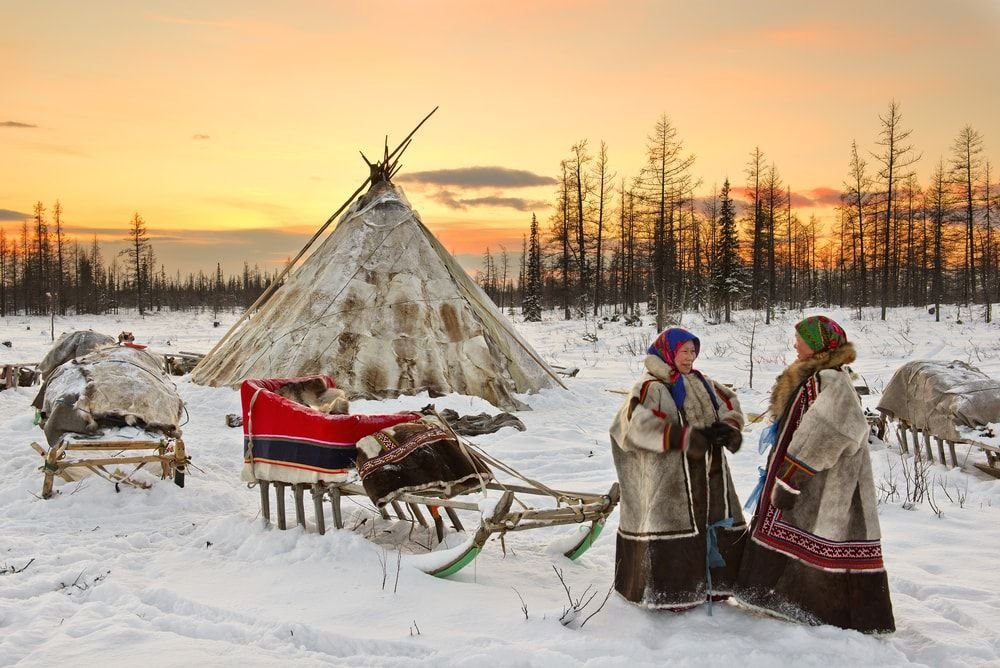

I once spent forty-eight hours with a group of Nenets reindeer herders in the Siberian Arctic, where the temperature was a vicious -40°C. There was no “safety net.” No GPS. No emergency backup. Just a vast, white silence and the rhythmic breathing of a thousand animals. I asked our guide how they survived a particularly brutal storm the week prior. He didn’t talk about “grit” or “hustle.” He simply pointed to the horizon and said, “We didn’t fight the wind; we became part of it.”
In 2026, as our “Digital Infrastructure” feels increasingly fragile and our urban lives more frantic, we are seeing a triumphant resurgence of interest in Nomadic Resiliency. We aren’t looking to these tribes for “primitive” anecdotes; we are looking to them for a sovereign masterclass in survival.
The Architecture of Fluidity
The most vicious mistake modern society makes is the obsession with “Permanence.” We build concrete fortresses and rigid schedules. Remote tribes—from the Hadzabe of Tanzania to the Dukha of Mongolia—live by the laws of Quiet Geometry. Their homes, their tools, and their very mindsets are designed to be dismantled in an hour.
- Dynamic Adaptation: Nomadic tribes don’t see “Change” as a crisis; they see it as the only constant. When the water dries or the herd moves, they move. This uncommon flexibility is the ultimate hedge against a volatile climate.
- Radical Essentialism: Every object a nomad owns must justify its weight. In 2026, this is a visceral lesson for a world drowning in “stuff.” To be resilient is to be light. To be light is to be free.
The Forbidden Intelligence of the Land
We have traded our “Ancestral Instincts” for a Digital Fog of apps and sensors. But the San people of the Kalahari possess a sovereign intelligence that no AI can replicate. They can read a “silent” landscape like a high-resolution map, identifying water sources and predator paths from a bent blade of grass.
This isn’t just “tracking”; it is a triumphant level of sensory integration. They live in a state of Hyper-Presence. While we spend our days distracted by the “Mirror Effect” of social media, they are engaged in a visceral conversation with the earth. They understand that survival isn’t about dominating nature—it’s about a sacred cooperation.
Editor’s Personal Note: Reclaiming Your Inner Nomad
You don’t have to move into a yurt to practice Nomadic Resiliency. It is a mental shift. It’s about stripping away the vicious dependencies we’ve built on technology and rediscovering our own sovereign capabilities.
A Practical Human Tip: Start by practicing “Situational Sovereignty.” Once a week, go somewhere unfamiliar without your phone. Navigate by landmarks. Read the weather by the clouds. Feel the uncommon discomfort of not knowing exactly where you are. That discomfort is where resiliency begins. It is the sound of your “Survival Ego” waking up.