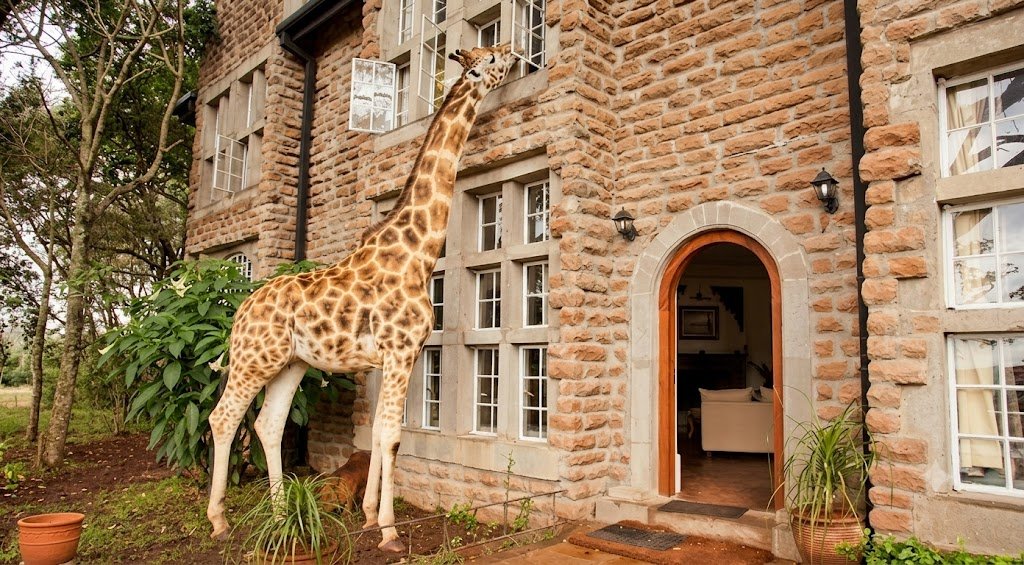
Most luxury hotels pride themselves on silver service, plush linens, or panoramic ocean views. But at a boutique 1930s estate in the leafy suburbs of Nairobi, the main draw arrives around 6:00 AM, nudging open your second-story bedroom window in search of a handful of alfalfa pellets.
Giraffe Manor isn’t just one of the most famous properties in East Africa—it’s one of those rare bucket-list destinations that actually lives up to the internet hype. Set within twelve acres of private land surrounded by a 140-acre indigenous forest, this ivy-clad stone manor offers an experience you quite literally cannot get anywhere else on Earth: sharing your morning meal with a herd of endangered Rothschild giraffes.
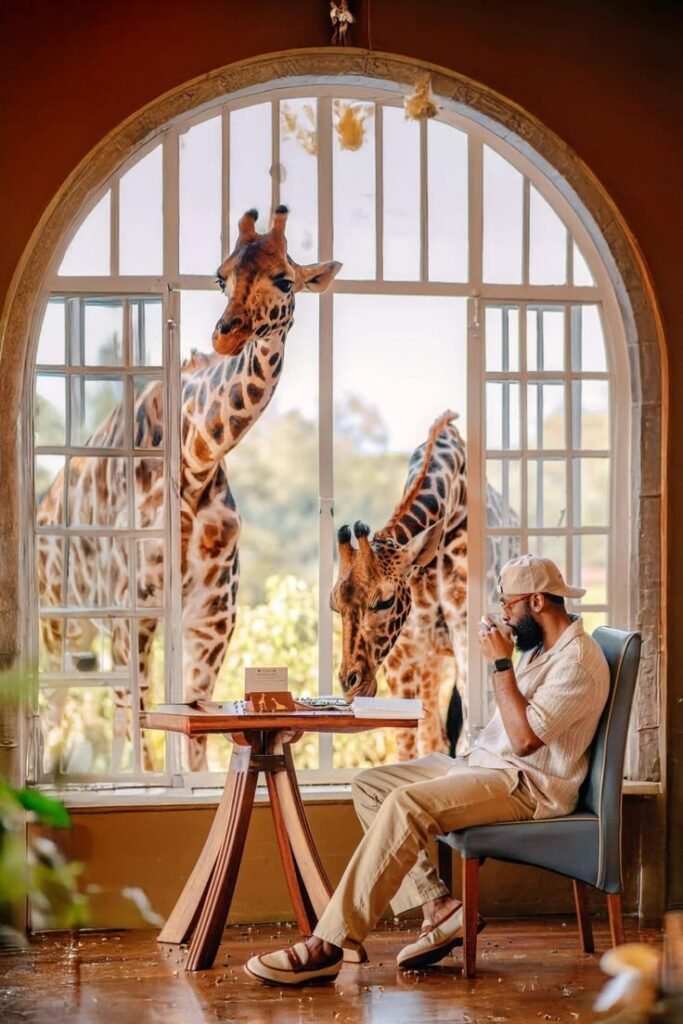
What Morning at the Manor Actually Feels Like
The day begins early, just as the morning mist lifts over the Lang’ata forest. Long before breakfast is served, you’ll hear the soft thud of hooves on the lawn outside. The resident herd knows the daily routine by heart, sauntering across the grounds from the neighboring sanctuary toward the main house.
Down in the dining room, the high latticed windows are flung wide open. As you sit down to sunlit tables set with fresh fruit, pastries, and steaming pots of Kenyan coffee, a series of towering spotted necks reaches straight into the room.
Feeding a sixteen-foot giraffe from your breakfast table is surreal. Their long, prehensile purple tongues—rough as sandpaper and surprisingly gentle—wrap around grass pellets right out of your palm. They move unhurriedly between guests, peering over shoulders, poking into tea cups, and occasionally leaning down for a photo before ambling off to the next open window.
A Refuge Born From Conservation
It’s easy to look at Giraffe Manor as the ultimate social media backdrop, but its origins are rooted in a critical wildlife rescue mission.
Back in the 1970s, the property was purchased by conservationists Jock and Betty Leslie-Melville. At the time, the Rothschild giraffe population in Kenya was plummeting due to severe habitat loss, with fewer than 130 remaining in the wild. The couple brought two young orphaned Rothschild giraffes to the estate, establishing the African Fund for Endangered Wildlife (AFEW) and creating a sanctuary dedicated to breeding and reintroducing them into Kenyan national parks.
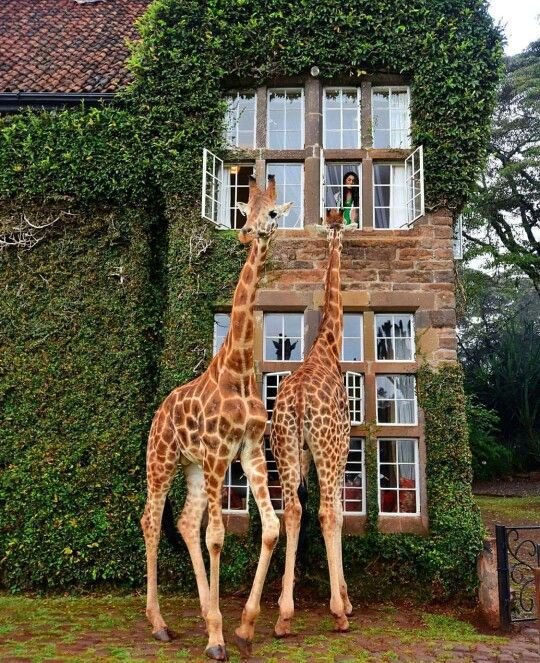
Today, that conservation project stands as a major success story. Thanks to the sanctuary’s breeding program, hundreds of Rothschild giraffes have been safely relocated back into wild habitats across Kenya, helping pull the subspecies back from the brink of extinction. When you stay at the manor, a portion of your booking directly supports the ongoing education and preservation work at the neighboring Giraffe Centre.
Planning a Visit Without the Headache
Because Giraffe Manor has just twelve bedrooms, securing a reservation requires serious advance planning. Rooms routinely sell out twelve to eighteen months in advance, particularly during Kenya’s prime safari months from July through October and December through February.
If you manage to lock in a stay, aim for a two-night booking to fully soak in the estate. Beyond the iconic breakfast experience, guests can enjoy traditional afternoon tea on the stone terrace as the sun dips behind the Ngong Hills, walk the quiet forest trails, or pop over to the nearby Sheldrick Wildlife Trust to meet rescued elephant calves.
Giraffe Manor captures something increasingly hard to find in modern travel: a genuine sense of childhood wonder. It’s a rare place where luxury hospitality and real conservation meet seamlessly, leaving you with memories—and likely a few slobbery camera lenses—that stay with you forever.