Southeast Asia’s diving circuit has long been anchored by the same names: Raja Ampat, the Philippines’ Tubbataha Reef, Indonesia’s Komodo waters. A quieter contender now sits alongside them, and it happens to belong to one of the youngest countries on Earth. Timor-Leste, which didn’t formally exist as an independent nation until 2002, is home to Atauro Island, a small stretch of water that a 2016 scientific survey identified as holding the highest documented average reef-fish diversity ever measured on a single reef anywhere in the world, a record that still hasn’t been surpassed.

A Nation Born From an Extraordinarily Difficult Path
Understanding Timor-Leste means understanding what it took to become a country at all. After centuries of Portuguese colonial rule, the territory endured a brutal Indonesian occupation from 1975 to 1999, a period during which the nation is estimated to have lost roughly a quarter of its population. The 1991 Dili Massacre, when Indonesian troops opened fire on a funeral procession at Santa Cruz Cemetery, killing 271 Timorese civilians, was captured on film by journalists present and became a turning point in building international pressure for independence. Following a UN-administered transitional period, Timor-Leste formally became independent on May 20, 2002, a date still marked with genuinely emotional public celebration, colour, music, and open pride in a country whose sovereignty came at extraordinary cost. That history isn’t a footnote to a travel story here, it’s essential context for understanding why the country’s tourism industry remains so nascent, and why what has survived ecologically has survived largely by circumstance rather than design.
The Reef That Broke the Scientific Record
Atauro Island sits roughly 36 kilometres, about a two-hour ferry ride, north of the capital, Dili, in the Wetar Strait between the Savu and Banda Seas. In 2012, marine conservationists Mark Erdmann and Gerry Allen conducted the first official survey of Atauro’s marine life and found it held the seventh-highest biodiversity of anywhere within the broader Coral Triangle, the vast marine region spanning the Philippines, Malaysia, Indonesia, Papua New Guinea, the Solomon Islands, and Timor-Leste. A more detailed 2016 Conservation International survey went further, documenting 642 fish species within a single survey area, a global record for marine biodiversity on one reef that remains unbroken. Timor-Leste’s waters as a whole hold nearly 600 species of reef-building coral, six of the world’s seven sea turtle species, and more than 2,000 species of reef fish, alongside regular sightings of dolphins, dugongs, and whale species including blue whales, humpbacks, and melon-headed whales passing through Atauro’s surrounding currents.
Why the Reef Survived When Others Didn’t
Atauro’s exceptional condition isn’t accidental, and it isn’t purely a byproduct of poverty either, though the country’s limited economic development has genuinely helped by keeping large-scale commercial fishing and coastal development away from these waters. A significant part of the credit belongs to tara bandu, a traditional Timorese system of resource management and social governance practiced by indigenous communities long before conservation became an international priority. Local elders describe genuinely measurable fish population recovery on Atauro since implementing tara bandu restrictions, a rare, encouraging case of customary law achieving real ecological results in a region where formal government conservation programmes often struggle with enforcement and funding.

An Island Still Finding Its Tourism Footing
Atauro remains genuinely undeveloped by regional standards, a small island of roughly 140 square kilometres and about 9,000 residents, where tourism infrastructure is sparse and centred almost entirely around the water itself. Diving and snorkelling operations exist but remain modest in scale, and the island’s slow pace, along with its complicated history as a former prison outpost, gives it a character distinct from more developed dive destinations elsewhere in the Coral Triangle. Timor-Leste more broadly is only beginning to imagine itself as a tourism destination at all, a little over two decades removed from its own independence, meaning visitors here are engaging with a country still building the basic infrastructure that more established Southeast Asian destinations have had generations to develop.
Why It Belongs on a Serious Diver’s List
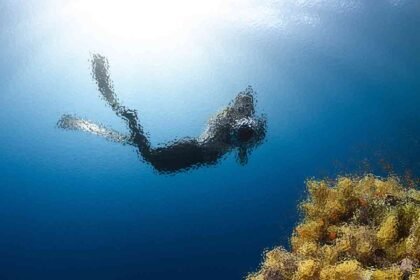
Atauro offers something increasingly rare in global diving: a reef ecosystem that reputable marine science ranks above better-known, more heavily marketed destinations, kept intact by a combination of remoteness, limited development, and a genuinely functioning traditional conservation practice. Visiting requires patience with limited infrastructure and an understanding of the difficult, recent history that shaped the nation surrounding these waters. For travellers willing to engage with both, Timor-Leste offers a rare pairing: one of Asia’s youngest nations, and possibly the best-preserved reef system in a region already famous for having some of the best on Earth.