
Every once in a while, nature pulls off a trick so seamless that your brain simply refuses to accept what your eyes are seeing.
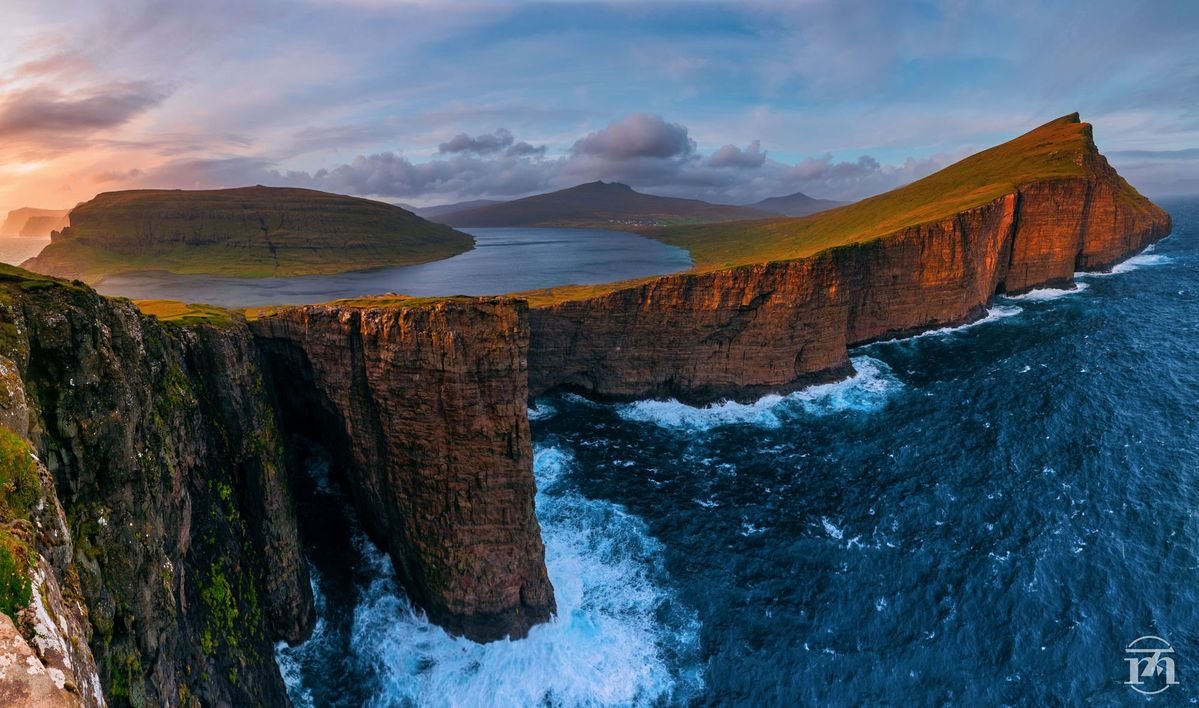
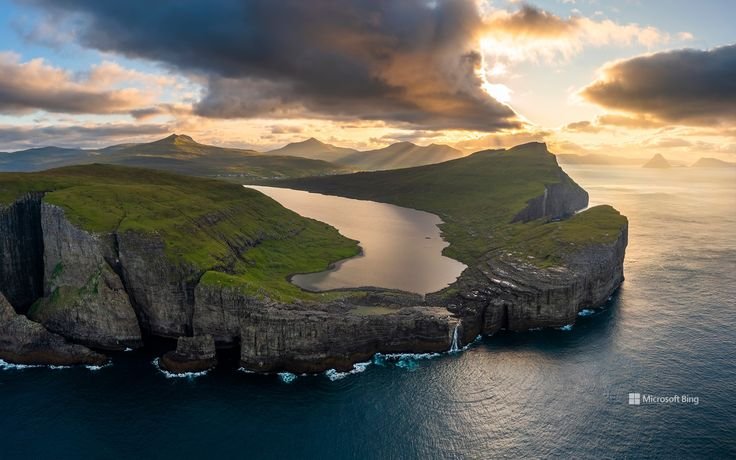
If you browse through travel photography of the North Atlantic, you’ve almost certainly stumbled across a picture of Lake Sørvágsvatn in the Faroe Islands. In these photos, a massive, ink-blue body of fresh water seems to levitate directly over the churning, white-capped waves of the ocean, suspended hundreds of feet in the air like a giant, overflowing infinity pool.
It’s one of the most viral natural wonders on Earth, but the real story behind this landscape is even more interesting than the photos suggest.
The Geometry Behind Nature’s Clever Illusion
When you look at Lake Sørvágsvatn from the famous viewpoint atop the Trælanípa cliff, the water appears to hover roughly 300 to 400 feet directly above sea level.
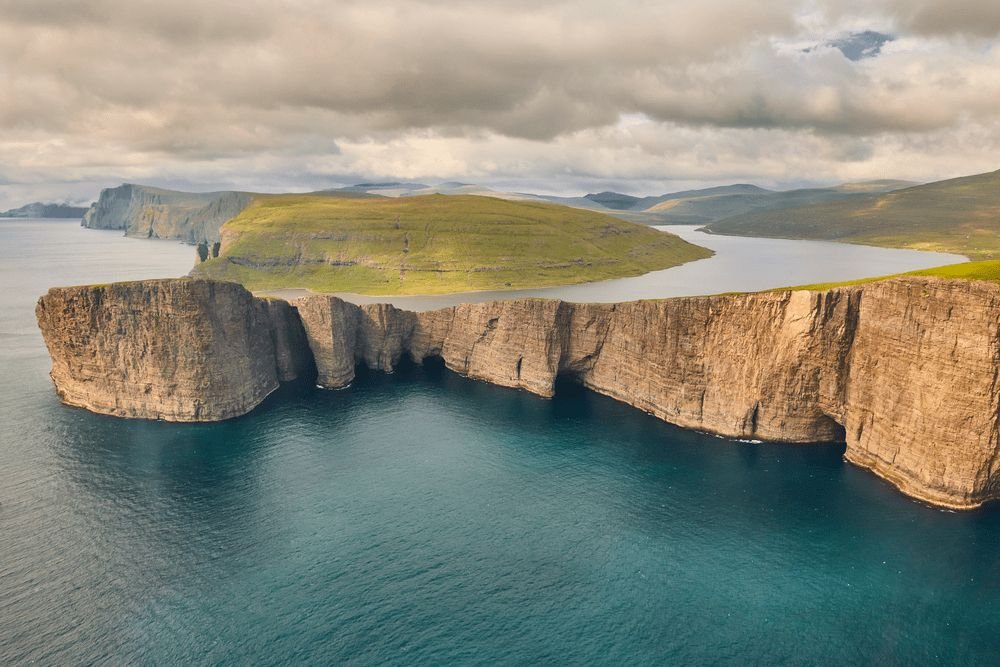
In reality, it’s a brilliant optical illusion crafted by perspective, sheer basalt rock faces, and clever camera angles.
The lake itself sits comfortably in a deep valley, elevated just 30 meters (about 100 feet) above the North Atlantic Ocean. What creates the mind-bending visual trick is the dramatic cliff surrounding it. Trælanípa—which translates grimly to “Slave Cliff”—shoots up nearly 142 meters (465 feet) straight out of the ocean.
When you stand on the high ridge of Trælanípa and look back toward the lake, the sharp drop-off of the cliff lines up directly behind the water, completely hiding the sloping land in between. The brain fills in the blank, making it look as though the lake is floating impossibly high above the sea on top of a thin, flat wall of rock.
Where the Lake Meets the Sea
While the floating effect might be a trick of perspective, the way the lake drains into the ocean is 100% real and equally breathtaking.
At the far southern edge of Lake Sørvágsvatn, the peaceful freshwater basin suddenly reaches the end of the basalt plateau. There, the water spills over the edge of the dark rock face in a roaring 30-meter drop called Bøsdalafossur waterfall, crashing directly into the wild surf of the North Atlantic below.
Standing at the edge of Bøsdalafossur, you get to witness a striking contrast: on one side, a calm, mirror-like freshwater lake surrounded by rolling green hills; on the other, raw ocean swells battering ancient volcanic cliffs.
The Great Faroese Naming Debate
Depending on which village you visit on the island of Vágar, you might hear this famous body of water called by two completely different names.
Residents of the village of Sørvágur, which sits near the western end of the lake, proudly call it Sørvágsvatn (meaning “the lake by Sørvágur”).
However, locals from the villages of Miðvágur and Vatnsoyrar further east prefer to call it Leitisvatn, since the land bordering the eastern shore is known as Leiti.
To avoid endless arguments, most locals simply refer to it as Vatnið—literally, “The Lake.” Considering it’s the largest lake in the entire Faroe Islands, stretching over six kilometers in length, it certainly earned that straightforward title.
How to Experience the Trail Responsibly
Because the Faroe Islands have seen a surge in global tourism over recent years, protecting delicate landscapes like Sørvágsvatn has become a top priority for local landowners.
To reach the iconic Trælanípa viewpoint, travelers take a well-maintained three-mile out-and-back coastal trail. The walk is relatively easy, winding along grassy banks where Faroese sheep outnumber human hikers by a wide margin.
To prevent soil erosion and fund the maintenance of the trail, local landowners now charge a small hiking fee, and visitors are required to stay strictly on the marked paths.
A Landscape You Have to See to Believe
In a world full of over-filtered travel photos and staged destinations, Lake Sørvágsvatn is one of the rare places that lives up to its reputation.
Even when you know the science and the angles behind the illusion, standing on the edge of Trælanípa with the North Atlantic wind in your face still feels like looking at magic. It’s a powerful reminder that nature doesn’t need CGI to leave us entirely speechless.