We live in an era of constant connectivity. Our pockets buzz with notifications, our calendars are color-coded down to fifteen-minute blocks, and even our vacations are often filtered through screen time and social media feeds.
It’s no wonder a growing movement of global travelers is seeking the exact opposite: complete digital silence.
Far from luxury beach resorts or high-tech city hubs, one of the world’s ultimate unplugged experiences is quietly capturing the imagination of burnt-out professionals and adventurous souls alike. It involves stepping onto the vast, rolling steppes of Central Asia, settling into a traditional Mongolian ger (yurt), and closing the laptop lid for a week.

No notification pings. No high-speed internet. Just endless open horizons, the smell of burning dried dung and wild herbs, and the steady, grounding rhythm of nomadic life.
What Living in a Ger Actually Feels Like
Stepping inside a Mongolian yurt for the first time is a instant lesson in intentional living.
Built around a central wooden frame, wrapped in heavy sheep’s wool felt, and tied together with woven ropes, the circular design has remained virtually unchanged for centuries. At the center sits a small metal stove—the beating heart of the home—used for boiling tea, cooking hearty stews, and keeping the space cozy when night temperatures drop over the steppe.
Without the background hum of televisions, hum of air conditioners, or blue light from screens, your senses recalibrate fast.
The day naturally follows the sun. You wake up to the soft rustle of wind against the canvas walls, light the stove, and step outside into air so crisp and clean it feels brand new. At night, without city light pollution to dim the view, the sky above the yurt transforms into a dazzling, unfiltered canopy of stars and the Milky Way.
The Joy of “Digital Fasting”
The first day or two off the grid can feel surprisingly unsettling. You might find your thumb reaching reflexively for a phone that has zero bar service, or feel a phantom twitch of urgency about unread emails.
By day three, however, the mental noise evaporates.
Travelers who spend a week in a nomad camp often describe a profound sense of psychological relief. Without constant digital inputs competing for your attention, your focus shifts back outward:
- True Conversation: Meals become communal rituals where stories are shared around a low wooden table over steaming cups of suutei tsai (salty milk tea) and fresh bread.
- Deep Reading & Writing: Hours stretch out peacefully, offering time to finish a long-neglected book, sketch the landscape, or write in a journal without distraction.
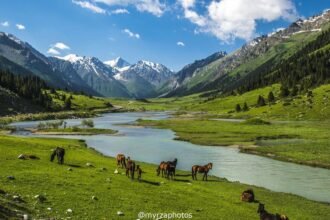
- Present Mindfulness: Simple tasks—fetching water, helping herd goats across the ridge, or watching horses run free across the plains—occupy your hands and quiet your mind.
Experiencing Real Nomadic Hospitality

What elevates a stay in a Mongolian ger beyond a simple digital detox is the genuine connection with local nomadic families.
Mongolian nomadic culture operates on deep traditions of hospitality born from surviving one of the planet’s most rugged environments. Strangers are welcomed into gers like old friends, offered warm food, homemade cheeses (aaruul), and shelter without expectation.
Participating in daily chores—whether learning to milk mares for traditional fermented airag, helping build a wooden fence, or riding horses across open pastures—gives travelers a rare, authentic glimpse into a lifestyle lived in total harmony with nature.
How to Prepare for Your Off-Grid Journey
Trading WiFi for wild steppes requires a willingness to embrace simplicity:
- Pack Mindful Gear: Bring a reliable power bank for your camera, a sturdy headlamp for night walks, a warm sleeping bag, and a physical book or journal.
- Prepare for Basic Amenities: Traditional ger stays often feature dry pit toilets and limited warm water, though eco-camps provide basic solar showers.
- Travel via Sustainable Operators: Book your stay through community-based tourism initiatives or local guides who ensure your visit directly supports nomadic families.
The takeaway? A week in a Mongolian yurt isn’t about escaping reality; it’s about reconnecting with it. By stepping away from the digital grid, you trade screen time for genuine presence, reminding yourself how good it feels to simply be right where you are.