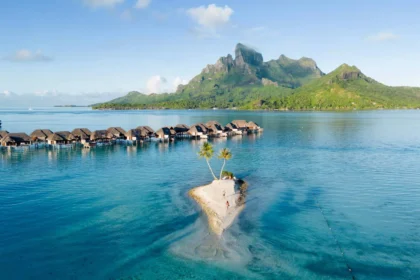
By day, the Maldives sells itself on the obvious: overwater villas, glass-clear lagoons, sand the colour of powdered sugar. After dark, a smaller but far stranger spectacle takes over on certain nights, certain beaches. Waves break onshore and, instead of white foam, leave behind a trail of electric blue light, as if the ocean itself were sparking. It’s called the Sea of Stars, and it’s real, natural, and considerably harder to predict than most travel photos let on.

What’s Actually Making the Water Glow
The phenomenon comes down to bioluminescent phytoplankton, mostly dinoflagellates, microscopic marine organisms present in vast numbers throughout Indian Ocean waters. When disturbed by a breaking wave, a swimming hand, or footsteps through shallow water, a chemical called luciferin reacts with oxygen in a process catalysed by the enzyme luciferase, producing a brief burst of blue-green light as a defence mechanism. It’s the same basic chemistry that makes fireflies glow, just triggered by movement in water instead of movement in air. The effect is most visible on genuinely dark nights, new moon phases specifically, when there’s no competing moonlight to wash out the plankton’s comparatively faint glow.
Vaadhoo Island: Where the Sea of Stars Went Viral
No single location is more associated with this phenomenon than Vaadhoo Island in Raa Atoll, roughly 200 kilometres north of Malé. Photographs taken here around 2014 circulated internationally and effectively created the “Sea of Stars” as a bucket-list travel moment, and the island’s eastern, open-ocean-facing shoreline still receives reliable current-driven plankton accumulation during peak season. Vaadhoo remains a small, inhabited local island rather than a private resort, meaning budget-conscious travellers can stay in community-run guesthouses for roughly 100 to 150 dollars a night, considerably cheaper than the resort alternative, with minimal light pollution working genuinely in visitors’ favour after dark.
Resort Islands With Their Own Reliable Glow
For travellers preferring a resort base, several properties have built real reputations around consistent bioluminescent displays. Milaidhoo Island, sitting inside the Baa Atoll UNESCO Biosphere Reserve, benefits from the same nutrient-rich upwelling that draws manta rays to nearby Hanifaru Bay, feeding the same plankton blooms that light up its shallow, calm lagoon after sunset. Gili Lankanfushi and Soneva Fushi round out the resort tier most frequently recommended specifically for bioluminescence, both chosen for their distance from Malé’s light pollution and lagoon conditions well suited to the phenomenon. Rangali Island in South Ari Atoll, home to the Conrad Maldives’ famous underwater restaurant, offers a further option, with the resort’s darker northern beaches, away from main lit areas, typically the most productive spot for a sighting.
When to Actually Plan Your Trip
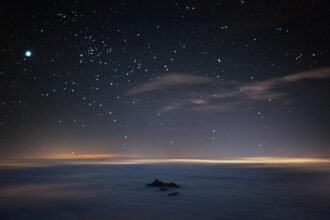
Bioluminescence has technically been recorded across every month of the Maldivian calendar, but June through October consistently emerges as the strongest window, when warmer water and seasonal current patterns support denser plankton blooms. Within that broader season, timing a visit around the new moon matters considerably more than the month itself, since even peak-season blooms can be washed out visually by a bright moon. Because lunar dates shift by roughly a day each month, it’s worth checking a lunar calendar before booking rather than assuming any given week in July or August will automatically align with dark skies.
The Honest Caveat Every Guide Should Include
Here’s the part worth being upfront about: bioluminescence is never guaranteed, on any night, at any resort, during any season. Sightings depend on plankton concentration, water temperature, current patterns, and moon phase all aligning simultaneously, and even experienced local guides describe predicting a specific night’s display as genuinely difficult. The practical advice that actually improves your odds is straightforward, stay multiple nights rather than one, choose new moon dates within the June-to-October window, and pick a location with minimal light pollution and a track record of regular displays, but no operator or travel guide can honestly promise a guaranteed glow on a single specific evening.

How to Actually Experience It Well
A few habits meaningfully improve the experience once you’re in position. Give your eyes at least fifteen to twenty minutes to adjust fully to the darkness before judging whether the plankton is active. Move gently through the water rather than thrashing, enough to stir the plankton without needlessly disturbing the surrounding ecosystem. And bring a proper waterproof camera or a phone with genuine low-light capability, standard smartphone cameras routinely struggle to capture bioluminescence’s actual visible intensity without some manual adjustment.
Why It’s Worth the Uncertainty
The Sea of Stars isn’t a manufactured attraction with a fixed showtime, it’s a genuine, unpredictable natural phenomenon, which is precisely what makes an actual sighting feel earned rather than staged. For travellers willing to plan around a new moon, choose the right atoll, and accept that nature doesn’t always cooperate on schedule, the reward is a version of the Maldives that has nothing to do with its usual daytime postcard, water that briefly, genuinely glows, entirely on its own terms.