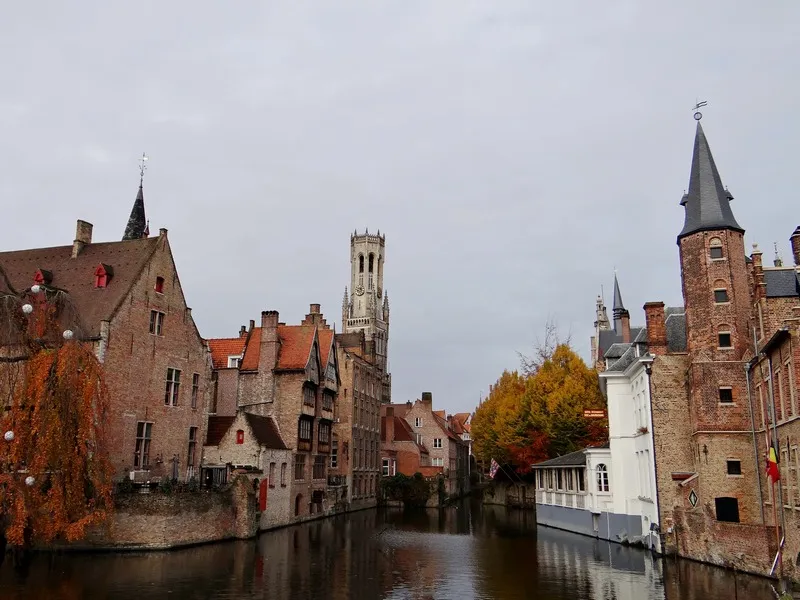

Bruges feels like a city paused in time. Cobblestone streets wind past stepped-gable houses, quiet canals mirror medieval facades, and church bells echo through narrow lanes. While the entire city enchants visitors, its Gothic architecture is what truly defines its character. A walk through Bruges is not just sightseeing — it’s an immersion into centuries of craftsmanship, faith, and civic pride carved into stone.
Recognized as a UNESCO World Heritage site, Bruges flourished during the Middle Ages as a powerful trading center. Wealth from commerce funded grand buildings, many designed in the Gothic style that dominated Europe between the 12th and 16th centuries. Today, these structures remain remarkably preserved, offering one of the most complete Gothic cityscapes in Europe.
Belfry of Bruges
Your architectural walk begins at Market Square, where the Belfry rises dramatically above colorful guild houses. Standing at 83 meters tall, this medieval bell tower symbolizes Bruges’ former independence and prosperity. Its vertical lines, pointed arches, and narrow windows are classic Gothic elements, emphasizing height and lightness.

Climbing the 366 steps to the top rewards you with panoramic views over red rooftops and church spires. From above, the Gothic rhythm of the city becomes clear — a forest of towers punctuating the skyline.
Basilica of the Holy Blood
Just a short walk away on Burg Square stands the Basilica of the Holy Blood. Unlike the towering Belfry, this church presents a fascinating contrast. Its lower chapel is Romanesque, dark and heavy, while the upper chapel bursts into Gothic detail. Pointed arches, stained glass windows, and delicate tracery create a vertical lift that feels almost weightless.
The Gothic style sought to draw the eye — and the spirit — upward. Light filtering through colored glass was meant to symbolize divine presence. Even if you’re not religious, stepping inside reveals how architecture can shape atmosphere and emotion.
Church of Our Lady
Continue your walk toward the Church of Our Lady, whose brick tower soars to 115 meters, making it one of the tallest brick structures in the world. Built primarily in the 13th and 14th centuries, the church reflects the wealth and ambition of medieval Bruges.
Inside, Gothic vaults arch overhead like stone ribs. Slender columns rise gracefully to meet the ceiling, demonstrating the engineering innovations of the era. The church also houses Michelangelo’s Madonna and Child sculpture — a Renaissance treasure resting within a Gothic setting, blending artistic periods beautifully.
Bruges City Hall
Return to Burg Square to admire Bruges City Hall, one of the oldest in the Low Countries. Its ornate Gothic facade features statues of biblical and historical figures set into niches, with pointed windows and intricate stone carvings. The building’s symmetry and decorative detail showcase how Gothic architecture extended beyond churches into civic life.
City halls like this were statements of power. The vertical emphasis and elaborate decoration symbolized authority and prosperity, much like cathedrals did for faith.
The Quiet Poetry of the Canals
As you wander away from major squares, Bruges’ canals reveal another layer of Gothic charm. Reflections of spires shimmer in still water, doubling their presence. Arched stone bridges frame views like living paintings.
In these quieter corners, Gothic architecture feels less monumental and more intimate. Small chapels, stepped roofs, and pointed windows blend into residential streets. The style becomes part of daily life rather than just grand landmarks.
Understanding Gothic Features
Throughout your walk, notice recurring elements: pointed arches, ribbed vaults, flying buttresses (though less dramatic here than in France), and tall stained glass windows. These features weren’t merely decorative. They allowed buildings to rise higher and admit more light, transforming heavy Romanesque forms into structures that seemed to defy gravity.
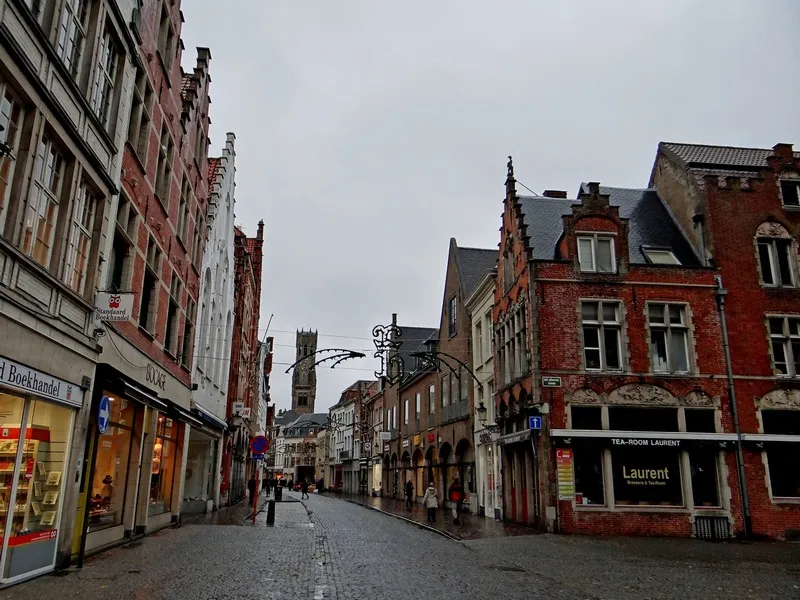
In Bruges, brick Gothic became especially prominent due to limited natural stone resources. The warm reddish tones give the city its distinctive appearance, softer yet equally dramatic compared to stone cathedrals elsewhere in Europe.
Ending at Dusk
As evening approaches, the city takes on a golden glow. Lights illuminate spires and reflect off canals, enhancing the dramatic silhouettes of Gothic towers against the twilight sky. The atmosphere grows quieter, footsteps echoing gently across cobblestones.
A Gothic architecture walk in Bruges is more than an exploration of buildings. It’s a journey through history, artistry, and urban identity. Every spire tells a story of ambition, devotion, and creativity. And as you leave the city’s winding streets, the vertical lines of its towers remain etched in memory — a timeless reminder of Bruges’ medieval soul.