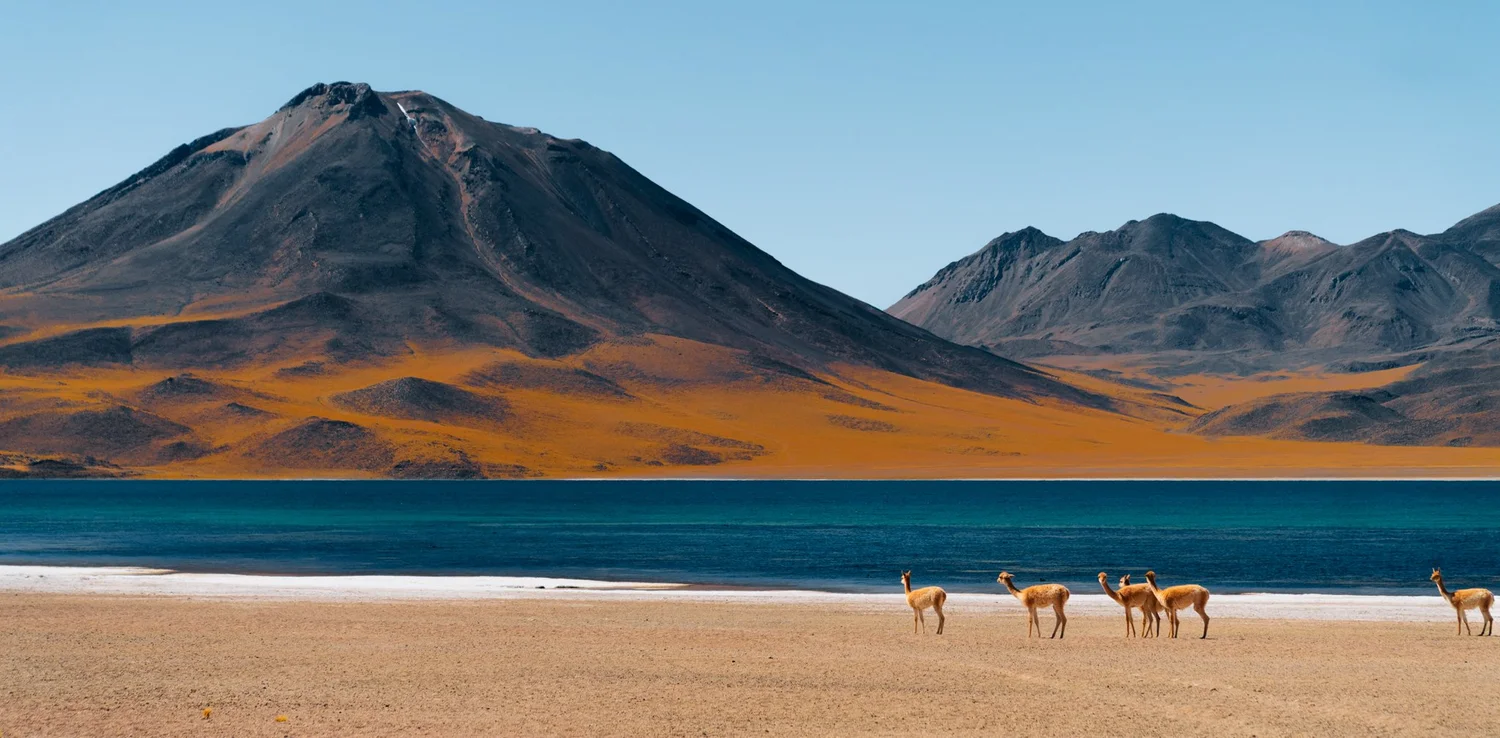
There are travel destinations that dazzle with abundance—lush forests, bustling cities, crowded beaches. And then there are places that astonish with their silence. The Atacama Desert in northern Chile belongs to the latter. Often described as the driest non-polar desert in the world, it is a landscape where rain is so rare that some weather stations have never recorded a single drop. Yet in this stillness lives a rare kind of beauty: stark, fragile, surreal, and unforgettable.
My journey began in San Pedro de Atacama, the small adobe town that acts as the desert’s beating heart. Nestled beneath the shadows of giant volcanoes, San Pedro doesn’t compete for attention—it simply exists with a quiet confidence. Narrow lanes, sandy streets, sun-baked walls, and the soft clink of bicycle rentals create an atmosphere that instantly lowers the rhythm of your breath. Everything moves a little slower here, as if the desert insists that you match its pace.
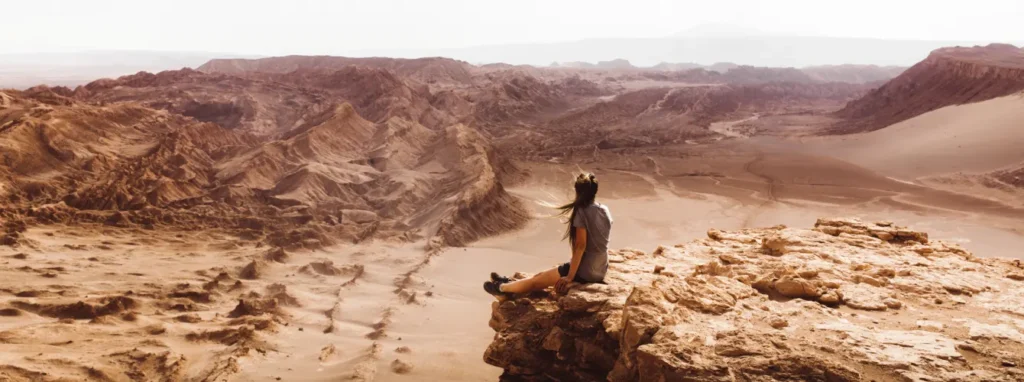
The first thing that strikes you about Atacama is the color. Not just one shade, but a shifting palette that repaints the horizon throughout the day. At sunrise, the desert glows rose-gold. By noon, it becomes a sheet of bright copper. And when evening falls, the sun dips behind the lunar rock formations, turning the landscape into deep amber, violet, and burnt orange. Light is the true artist here, sculpting every dune and ridge.
No place reveals this better than Valle de la Luna—the Valley of the Moon. As its name promises, it feels extraterrestrial. Wind-carved salt formations jut out of the ground like ancient ruins. Waves of sand rise and fall in rhythmic patterns. When you walk there, your footsteps echo slightly, as if the earth is hollow beneath. It’s a reminder that Atacama is a world shaped not by water or vegetation, but by time and wind alone.
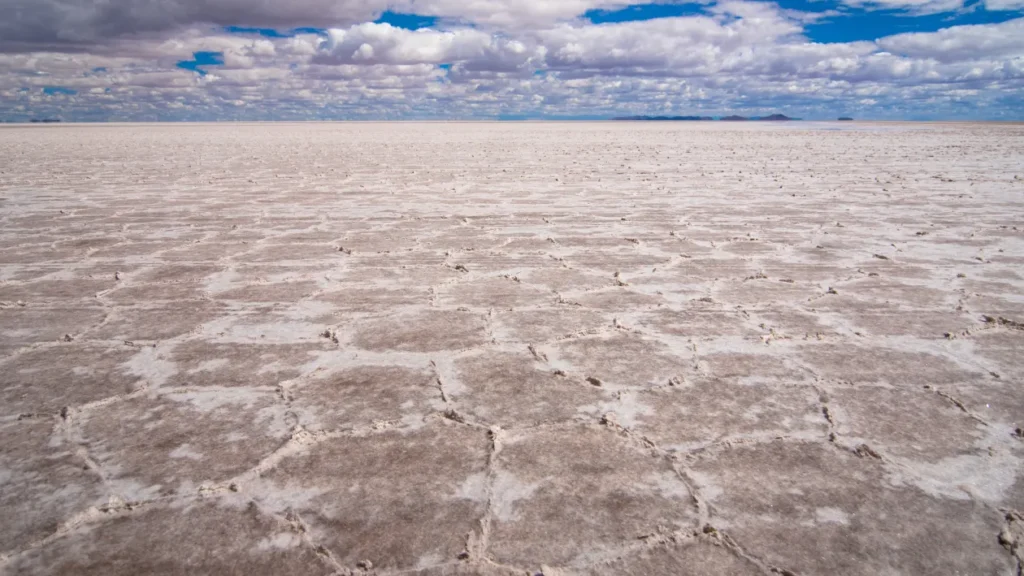
From alien landscapes to ancient human stories, Atacama is full of contrasts. One afternoon, I joined a tour to the Atacama Salt Flats, a white plain that stretches into a mirage-like horizon. Flamingos, astonishingly elegant in the middle of a desert, tiptoe in shallow lagoons, their reflections shimmering in pastel pinks and blues. The birds seem too delicate for such a harsh environment, yet they thrive here, feeding on mineral-rich waters that sparkle with crystallized salt. Watching them, I felt a strange sense of peace—nature, in all its contradictions, always finds balance.
But the moment I’ll remember most wasn’t during the day. It was the night sky.
Atacama is considered one of the best stargazing destinations on Earth, thanks to its high altitude, dry air, and nearly perpetual cloudless skies. I visited an observatory on the outskirts of San Pedro, where the desert air felt crisp and cold. As the astronomer switched off the last of the lights, the sky erupted—millions of stars scattered like powdered silver. The Milky Way floated overhead with astonishing clarity, a glowing river of light stretching from one end of the desert to the other. Shooting stars streaked across the darkness every few minutes. There was no noise, no wind—just the overwhelming sensation of standing inside the universe instead of beneath it.
If the cosmos inspires awe, Atacama’s geothermal fields inspire curiosity. The El Tatio Geysers, sitting at a breathtaking altitude of over 4,000 meters, are best visited before dawn. In the freezing early hours, the earth exhales plumes of steam that rise from dozens of geysers across a vast plateau. As the sun creeps up, the mist catches the light and transforms the entire valley into a glowing, boiling dreamscape. It’s a meeting place of extremes—icy air, scalding ground, and the quiet hum of a living planet.
By the time I left the desert, I realized Atacama was not a destination of “things to do” but a destination of “things to feel.” It teaches you the value of stillness. It shows you how silence can be beautiful, how emptiness can be full, and how the simplest landscapes can hold the deepest stories.
In a world that moves too quickly, the Atacama Desert offers something rare: a moment where time itself seems to pause. And sometimes, that is the greatest luxury of all.