
Some places unfold slowly, like a whispered story meant only for those who listen. Laos is one of those places—a country where mist clings to mountains at dawn, where rivers guide the rhythm of daily life, and where time seems to stretch gently rather than race ahead. For travelers looking for a quieter kind of beauty, Laos is a revelation waiting in plain sight.
My journey began in Luang Prabang, a city that feels suspended between heritage and tranquility. With its saffron-robed monks, colonial architecture, and riverside charm, it offers a level of calm rarely found in bustling Southeast Asia. Every morning at sunrise, I watched locals line the streets for the ancient ritual of almsgiving. The monks moved silently, their robes glowing softly in the early light, accepting offerings of sticky rice and fruit. The atmosphere was serene—respectful, spiritual, and deeply rooted in tradition.
Later in the day, the city awoke with a gentle hum. I wandered through the night market where artisans displayed handwoven textiles dyed with natural pigments, silver jewelry carved with exquisite detail, and wooden crafts made by families who have passed down their skills for generations. Every item told a story. Every vendor had time to share it.
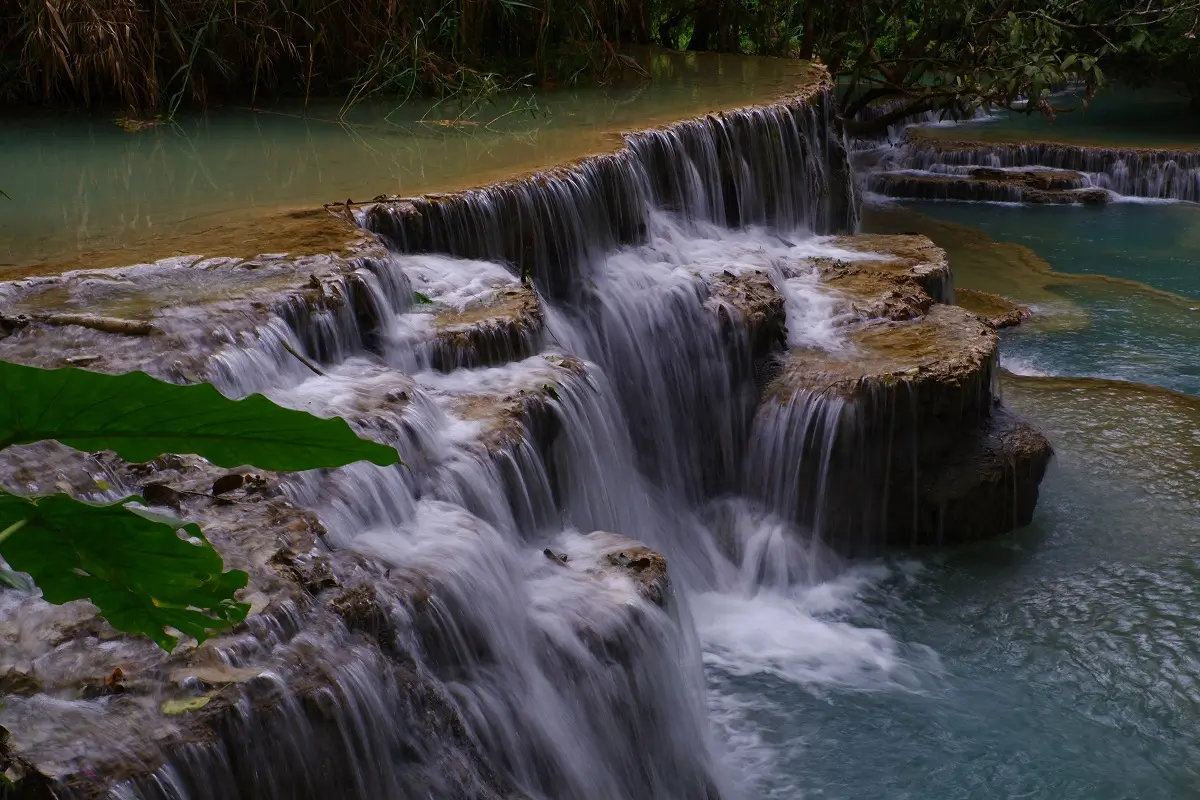
But it was the natural world beyond the city that truly captured my heart. A short drive led me to Kuang Si Falls, a cascading wonder of turquoise pools framed by forests thick with butterflies. The water shimmered in shades of jade and ice-blue, as if painted by an artist with a dreamlike palette. I climbed to the higher tiers, where the crowds thin out and the sound of falling water becomes a kind of meditation. For a few minutes, I sat barefoot on a rock with my feet in the cool current, watching sunlight splinter through the trees. It felt like the world had slowed to a gentle pulse.
Traveling south along the Mekong River, I reached Vang Vieng, once known for parties but now reborn as a sanctuary for nature lovers. Here, limestone karsts rise like ancient guardians over emerald rice fields. I spent an afternoon drifting down the Nam Song River in a kayak, passing through landscapes that felt lifted from a storybook. Cows grazed lazily along the banks, villagers washed clothes in the river, and children waved from bamboo bridges. When I looked up, the sky stretched endlessly, its vastness mirrored by the mountains around me.
The next day, I hiked into the limestone caves that wind through the region like secret passages. Inside, the world felt timeless—cool, quiet, and echoing with drops of water that seemed to mark their own version of time. Stepping back into daylight felt like emerging into another world.
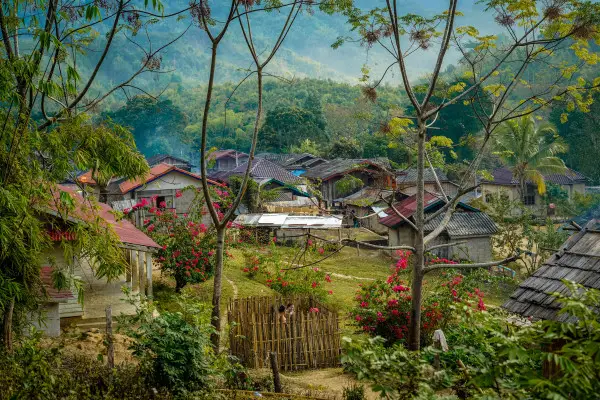
But the real essence of Laos lies in its small villages, where traditions thrive without urgency. In Nong Khiaw, a peaceful town along the Nam Ou River, I found a kind of stillness that’s hard to describe. My guesthouse overlooked the river, and every morning, I watched fishermen paddle quietly in narrow wooden boats as mist curled around the peaks. The rhythm of life here felt deeply connected to nature—no rush, no noise, no expectations.
One afternoon, I joined a local family for a cooking lesson. The ingredients were simple: lemongrass, sticky rice, river herbs, and fresh vegetables from their garden. As we prepared the meal, the grandmother explained how food in Laos is more than nourishment—it’s a bridge between people, a reason to gather, and a way to honor the land. When we finally ate together on a bamboo mat, the conversation flowed easily despite language barriers. Warmth doesn’t always require words.
My final stop was the 4000 Islands, a region where the Mekong spreads wide and slow, dotted with small islands that feel like a world apart. Life moves at the pace of the river. I biked through Don Khon, passing water buffalo resting in fields and children playing in the shade of banana trees. At sunset, I sat by the riverbank as the sky glowed gold and lavender, merging with the water until it was impossible to tell where one ended and the other began.
Laos doesn’t seek to overwhelm you. Instead, it gently reveals who you become when the world grows quiet. It’s a place that stays with you—not through grand spectacles, but through stillness, kindness, and the sense that time can be soft when we let it.