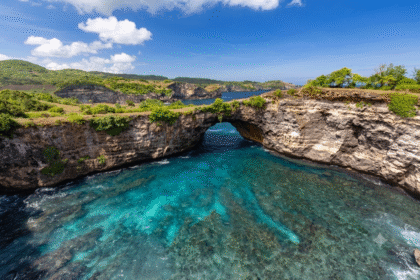
A church built on a cliff is both beautiful and vulnerable. Over the years, wind and waves gradually chip away at the rock beneath it. Cracks may appear along the cliff’s edge, and warning signs might mark areas too dangerous to approach. Still, the church doors open each morning, welcoming visitors who are drawn by both its scenic setting and spiritual significance.
Across Europe, iconic sites like the monastery complex of Meteora rise dramatically from towering rock pillars, while the historic St. Michael’s Mount stands proudly above tidal waters. Although not all churches face active erosion, their cliffside locations evoke the same sense of awe and fragility.
Where Earth and Ocean Collide
A crumbling cliff is a reminder that landscapes are never permanent. Coastal erosion is a slow but relentless process. Waves crash against the rock face day after day, carving caves, weakening foundations, and reshaping shorelines.
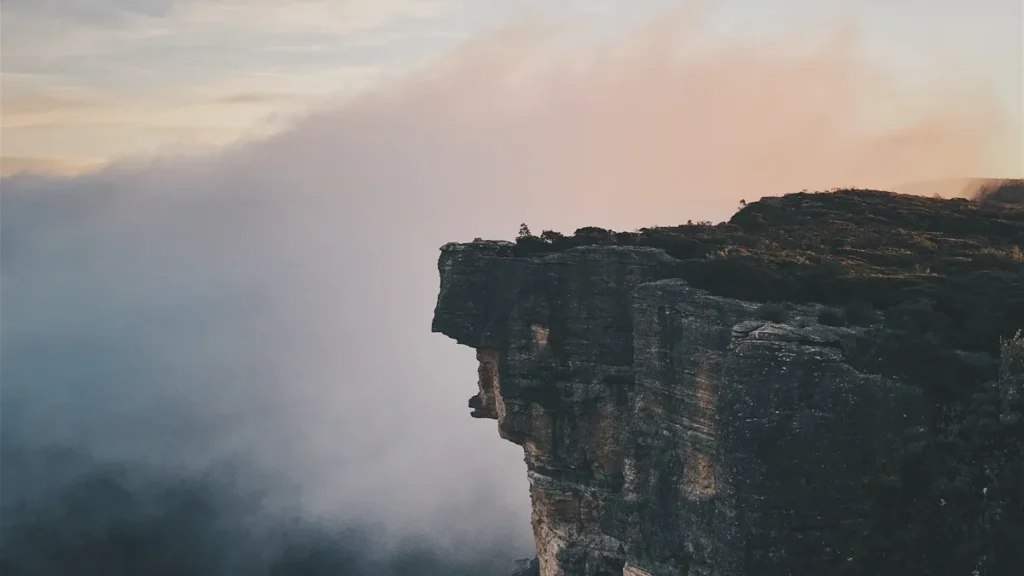
From the church’s viewpoint, the sea stretches endlessly toward the horizon. During calm days, sunlight reflects off gentle waves, casting a peaceful glow. But when storms roll in, the scene transforms. Powerful gusts whip against the walls, and the ocean roars below. The church becomes a silent witness to nature’s fury.
This contrast between tranquility and turbulence mirrors life itself — moments of stillness interrupted by storms.
A Symbol of Endurance
Despite the crumbling cliff beneath it, the church often feels steady and grounded. Its stone walls may be centuries old, built by communities who trusted both their craftsmanship and their faith. Every brick and arch reflects devotion — not just to religion, but to the idea of hope standing firm against uncertainty.
Visitors who step inside frequently describe a profound sense of calm. The sound of wind outside fades into quiet reflection. Candles flicker gently, illuminating stained-glass windows that tell stories of perseverance and grace.
Standing inside a church on a fragile cliff can feel symbolic: faith does not eliminate risk, but it offers strength in the face of it.
Communities on the Edge
For local communities, such churches are more than scenic landmarks. They are places of baptism, marriage, mourning, and celebration. Generations may have gathered within those walls, creating a deep emotional connection to the site.
When erosion threatens the structure, difficult decisions arise. Should engineers reinforce the cliff? Should the building be relocated stone by stone? Or should nature be allowed to take its course?
In some regions, preservation efforts involve stabilizing rock faces with modern engineering techniques. In others, communities accept that the land may eventually reclaim what was built upon it. Either way, the church’s presence leaves a lasting imprint.
The View from the Edge
There is an undeniable magnetism to standing near such a church. Looking down at waves crashing far below creates a heightened awareness of both beauty and danger. Looking up at the steeple against an open sky evokes aspiration and transcendence.

Sunsets are especially powerful. As the sky turns shades of orange and purple, the church silhouette becomes dramatic against fading light. It appears timeless, even as the cliff beneath it slowly changes.
Lessons from a Crumbling Cliff
A church standing on a crumbling cliff teaches quiet lessons. It reminds us that permanence is often an illusion. It shows that strength and vulnerability can coexist. It encourages us to build meaningfully, even when circumstances are uncertain.
Nature will continue its slow reshaping of land and coastlines. Yet the spirit symbolized by the church — resilience, faith, and hope — can endure far beyond physical structures.
In the end, the true foundation of such a church may not be the rock beneath it, but the belief it represents. Even on the edge of change, it stands — steadfast against wind, waves, and time itself.