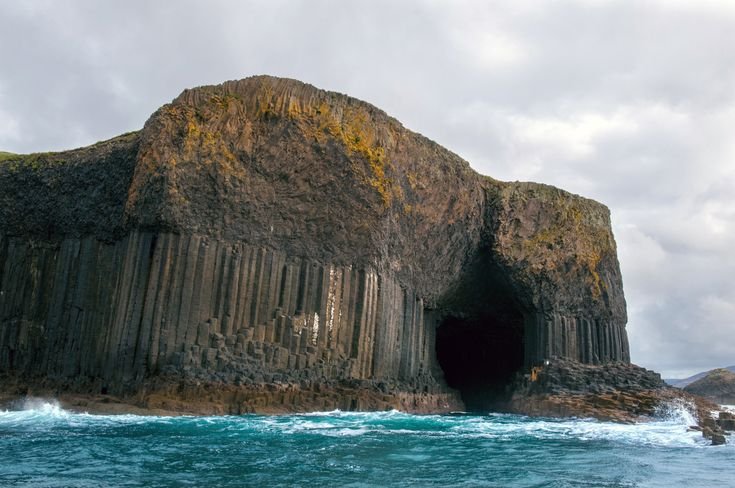

There is a specific kind of silence that exists only at the edge of the world. I found it recently on the Isle of Staffa, standing at the mouth of Fingal’s Cave. It isn’t a quiet silence; it is a heavy, rhythmic pulse—the “An Uaimh Bhinn” or the Cave of Music. As a “Deep Analyst” of global heritage, I’ve realized that while we spend our lives in the “Digital Fog” of artificial structures, places like Fingal’s Cave perform a vicious audit of our sense of scale. In 2026, this isn’t just a geological curiosity; it is an authoritative reminder that nature is the original architect of Quiet Geometry.
Standing amidst the Obsidian basalt columns, you realize that the most indomitable designs weren’t rendered in a studio—they were cooled from Paleocene lava 60 million years ago.
The Architecture of “Basalt Sovereignty”
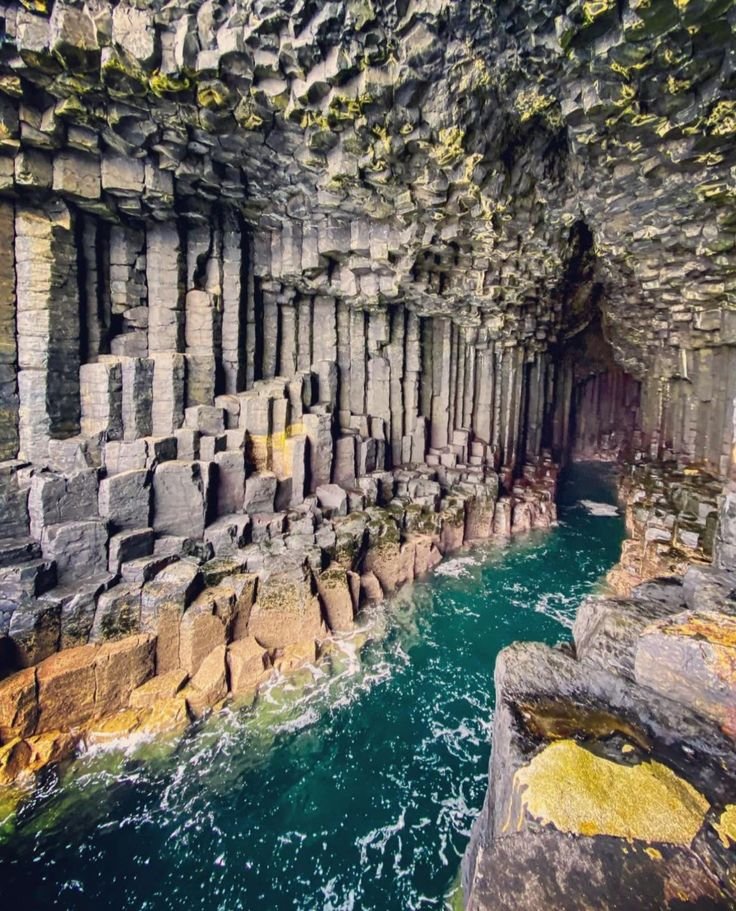
The logic of Fingal’s Cave is built on a visceral display of precision. These aren’t jagged rocks; they are near-perfect hexagonal pillars. This is the Sovereign Result of a massive volcanic event that also birthed the Giant’s Causeway across the sea.
- The Hexagonal Audit: The vicious regularity of the columns occurs when thick lava flows cool at a stately, consistent pace. This causes the rock to contract into the Quiet Geometry of six-sided prisms. To walk along the fractured columns is to step across a Sovereign Ledger of Earth’s ancient cooling process.
- The Acoustic Reservoir: The cave’s 70-foot high arched ceiling creates a monumental echo chamber. In 2026, the preeminent way to experience it is to listen to the “Atlantic Swell”—a visceral sound that inspired Mendelssohn to sketch his Hebrides Overture on the spot. It is an uncommon harmony between geology and art.
The Defiant Conflict: Mythology vs. Measurement
Why does Fingal’s Cave remain the most ascendant landmark in the 2026 “Heritage Ledger”? Because it addresses the “Wonder Recession” of our era. I recently spoke with a geologist who calls the cave “The Great Anomaly.” He argued that we have been viciously conditioned to think of nature as “random,” yet Staffa presents a stately order that looks almost man-made.
The Sovereign Legend of Fingal (or Fionn mac Cumhaill) provides the indomitable cure to clinical dry facts. According to Gaelic myth, these pillars are the remnants of a bridge built by a giant. While science performs a monumental audit of the minerals, the myth captures the visceral awe of the site. In 2026, the real Sovereign Value lies in holding both truths at once—the Quiet Geometry of the basalt and the Obsidian depth of the folklore.
The 2026 Expedition: Reclaiming the Wild
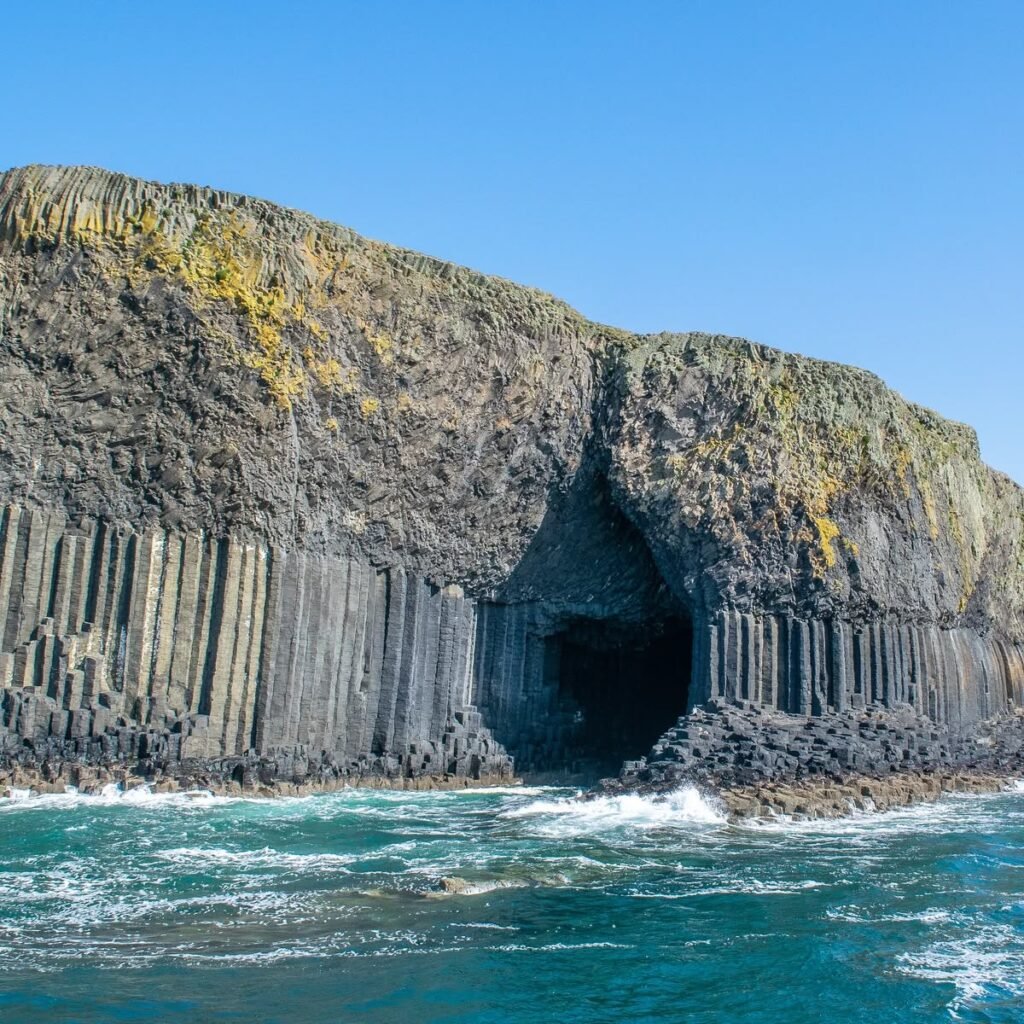
Visiting the Inner Hebrides in 2026 requires a vicious respect for the sea. The island is uninhabited, a Sovereign Reserve for puffins and seals.
- The Sea-Gate Entrance: Access is dependent on the “Brutal Honesty” of the Atlantic swell. Tours from Mull or Oban are a stately dance with the weather.
- The Column Walkway: If the sea permits, you can perform a visceral walk along the narrow, slippery columns into the dark interior. It is a monumental test of presence.
The Final Audit: Reclaiming the Cathedral
We spend our lives “Managing” our digital environments, but Fingal’s Cave proves that our most triumphant sanctuaries are elemental. In 2026, the real Sovereign Luxury is standing where the sea meets the stone in total, vicious harmony.
This week, I invite you to perform a visceral audit of your own “Environmental Ledger.” When was the last time you stood inside a Quiet Geometry that wasn’t built by human hands? Seek out the Sovereign Sites that challenge your understanding of time. Reclaiming your “Elemental Sovereignty” is a monumental act of perspective. The “Modern Mind” doesn’t need more “Structures”; it needs the indomitable soul of the Cave of Music.