
We like to think of our hyper-connected world as small. You can hop on a commercial flight in London and step off in Sydney twenty-four hours later, streaming high-definition videos from 30,000 feet the entire time.
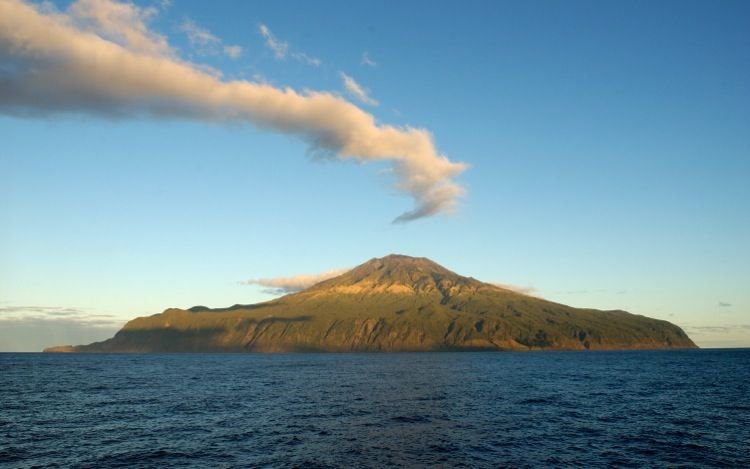
Then you look at a map of the South Atlantic Ocean and find a tiny volcanic speck floating roughly 1,750 miles off the coast of South Africa and 2,100 miles from South America.
That is Tristan da Cunha, officially recognized as the most remote inhabited island on Earth.
There is no airport here. No landing strip cut through the volcanic rock. No commercial jets overhead. If you want to get to Tristan, you have to board a working fishing vessel or a polar research ship in Cape Town and spend six to seven rough, rolling days at sea navigating the unpredictable swells of the Roaring Forties.
The Settlement at the Base of a Volcano
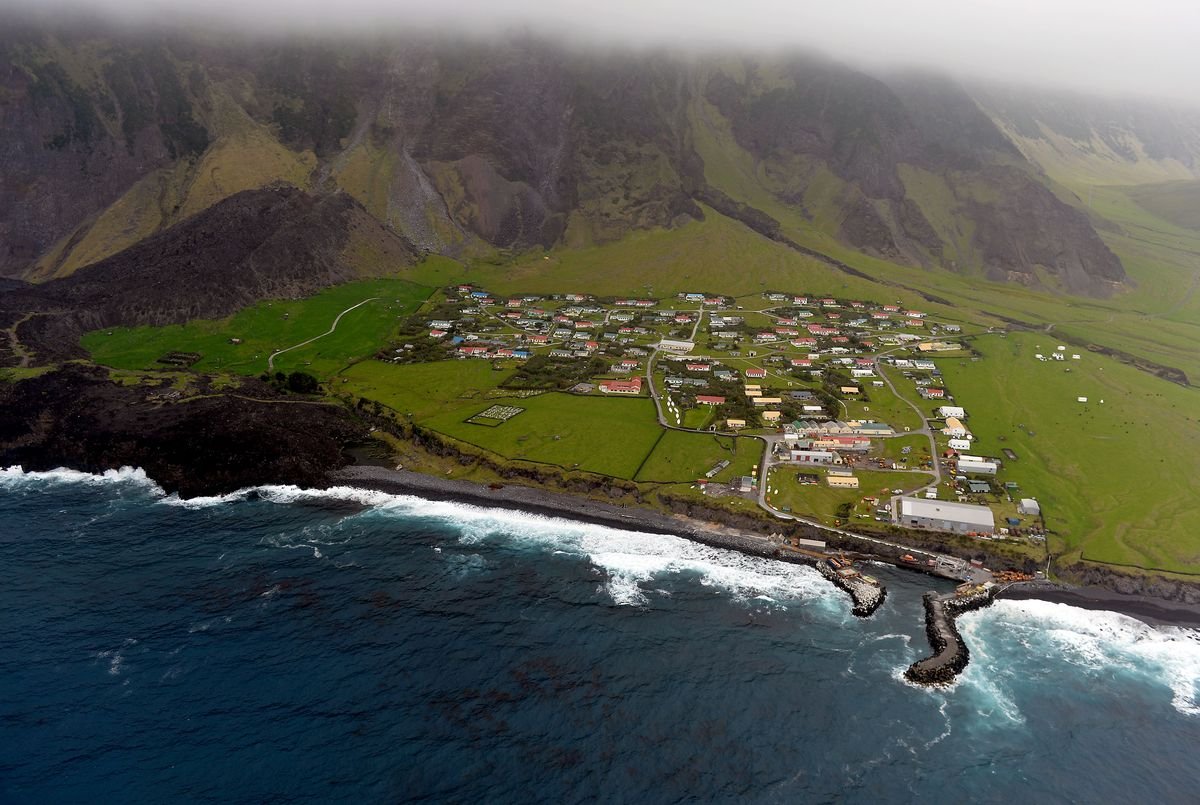
All 230-or-so permanent residents live in a single, quiet village sitting on a narrow coastal plain below a towering 6,700-foot active shield volcano. The village carries the charmingly grandiose name of Edinburgh of the Seven Seas, though locals simply refer to it as “The Settlement.”
The community traces its roots back to the early 19th century when the British military stationed a garrison on the island to prevent Napoleon Bonaparte from being rescued from his exile on nearby Saint Helena. When the garrison was eventually recalled, a few soldiers stayed behind, forming a unique, communal society that has quietly endured for over two centuries.
Because of its extreme isolation, the population shares just a handful of original surnames—like Glass, Green, Repetto, and Swain. Every piece of land on the island is communally owned, ensuring that no single family can hoard resources or buy up real estate.
How Daily Life Works When Shipping Takes Months
Living thousands of miles away from mainland supply chains forces a level of self-reliance that most modern city dwellers can barely fathom.
Fresh produce doesn’t arrive on demand. Instead, the islanders rely heavily on cattle farming and individual potato patches located a few miles down a dirt track from the main village. Stone walls surround these tiny garden plots to shelter crops from relentless Antarctic gales.
The local economy revolves almost entirely around two things: the island’s famous rock lobster export—harvested carefully to ensure marine sustainability—and the sale of collectible postage stamps and coins to global collectors.
Supplies arrive via ship only about eight or nine times a year. When a vessel finally anchors offshore, the entire town mobilizes. Unloading cargo isn’t automated; it involves maneuvering small wooden boats through pounding surf into a tiny harbor, lifting heavy crates of medicine, tractor parts, and non-perishable groceries by hand.
If a ship misses its window due to stormy weather, the island simply waits another few months for the next one.
Resilience, Community, and Unplugged Living
You might expect life in such a solitary place to feel bleak, but visitors who make the arduous journey consistently describe a warm, remarkably calm community. Crime is virtually non-existent, doors are left unlocked, and everyone knows everyone else’s business—in the best possible way.
That deep social bond was put to the ultimate test in 1961 when the volcano above the village unexpectedly erupted. The entire population was safely evacuated to Britain, stepping straight out of a 19th-century agrarian lifestyle and into the noise of modern 1960s England.
Yet, despite being offered homes, jobs, and modern conveniences in the UK, almost the entire population chose to return home as soon as the lava cooled and the island was declared safe again.
The Ultimate Lesson in Slow Living
Tristan da Cunha isn’t a place for quick weekend getaways or casual tourism. Permits to land on the island are strictly controlled by the local Island Council to preserve their delicate community and natural environment.
In an age defined by instant notifications, next-day shipping, and constant noise, Tristan da Cunha stands as a living reminder of a slower, more grounded way to exist. It proves that human beings don’t need endless noise or global hyper-convenience to build a rich, meaningful life—just good soil, strong neighbors, and the patience to wait for the sea to clear.