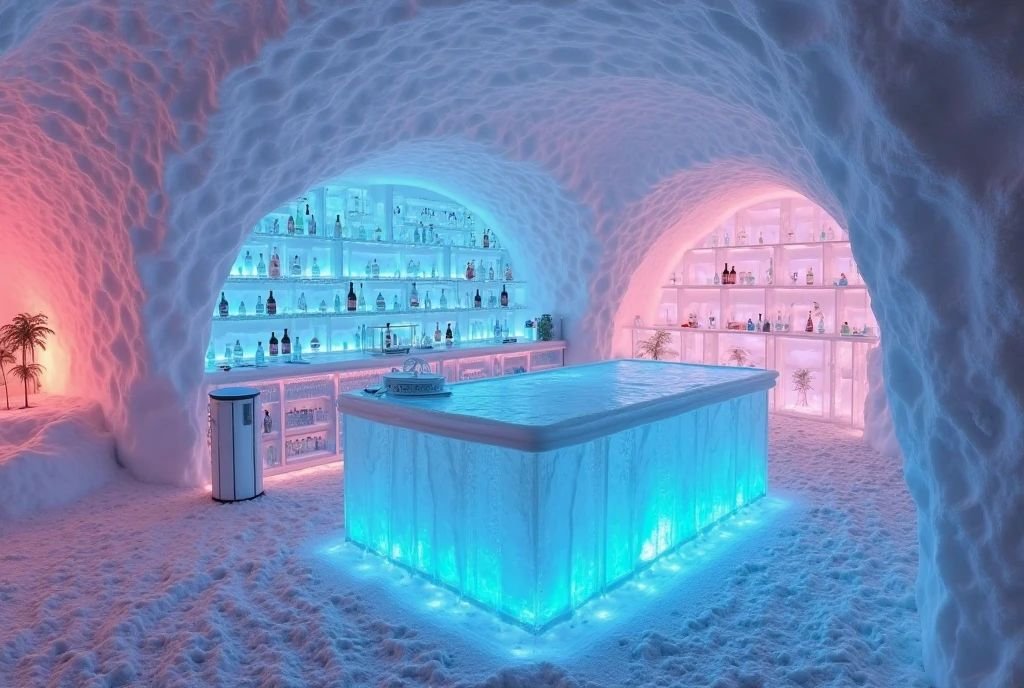

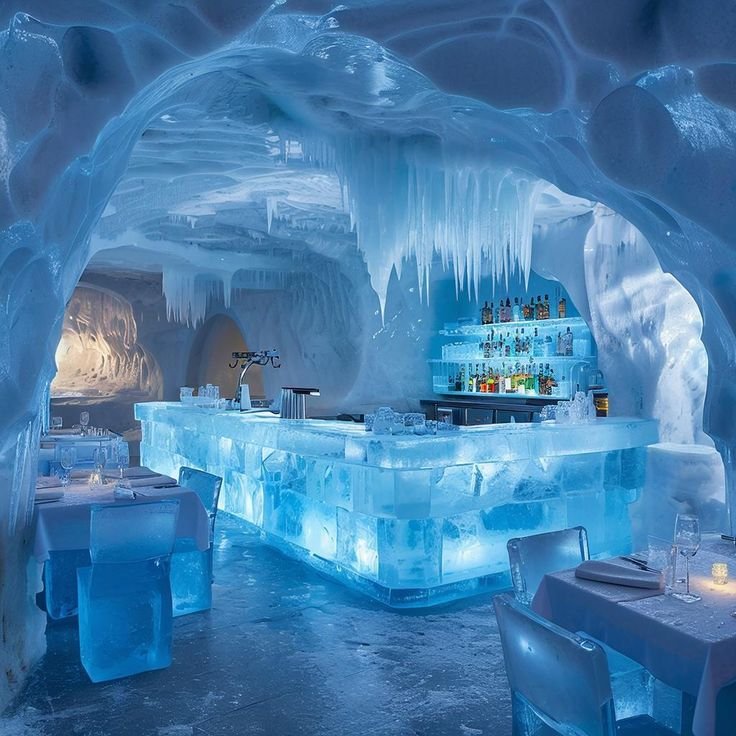
Every December, 200 kilometers north of the Arctic Circle in the tiny Swedish village of Jukkasjärvi, a hotel opens its doors. It features grand chandeliers, intricate wall carvings, sculpted suites, and a fully functioning bar—all made entirely of crystal-clear ice and packed snow.
A few months later, in late spring, every single room melts away, flowing directly back into the river from which it was born.
Sweden’s famous Icehotel isn’t just an accommodation; it’s a living, breathing art installation with a shelf life. But why go through the immense physical labor and expense of harvesting thousands of tons of ice to build a luxury hotel from scratch every single year, only to watch it disappear?
The answer lies in a blend of indigenous history, sustainable design, and a radical approach to architecture.
1. Born From a Winter Tourism Mistake
The story of the Icehotel started in 1989 with a happy accident. Yngve Bergqvist, an entrepreneur trying to draw summer tourists to Swedish Lapland, wanted to find a way to make the long, pitch-black Arctic winters attractive to travelers.
Inspired by Japanese ice sculpting techniques, he invited artists to lead an ice-carving workshop in Jukkasjärvi. The following winter, a group built a 60-square-meter igloo on the frozen river to host an art exhibition.
One night, a group of adventurous visitors arrived in town with nowhere to sleep. Armed with reindeer skins and sleeping bags, they asked if they could spend the night inside the icy art gallery. They woke up invigorated, the story went viral, and the concept of sleeping on ice was officially born.
2. The Engine: The Pristine Torne River
You can’t build a structure like this with standard tap water or artificial snow—it lacks the clarity and structural integrity needed for giant sculptures. The true heart of the project is the neighboring Torne River, one of the last undammed, unpolluted rivers in Europe.
The process is a massive, year-round ecological cycle:
- Spring Harvest: In March, as the river ice reaches its thickest and clearest point, workers harvest roughly 2,500 tons of ice blocks.
- Cold Storage: The massive blocks are stored in a specialized, sun-powered cooling warehouse throughout the mild summer months.
- Winter Construction: When temperatures plunge in November, architects, builders, and selected international artists gather to begin construction using a blend of ice and “snice” (a structurally dense mix of snow and water that insulates the building).
Because the building material comes directly from the local river, the hotel has virtually zero environmental footprint. When spring arrives, the melting structure drains directly back into the Torne, completing a perfect natural loop.
3. Ephemeral Art: Never the Same Hotel Twice
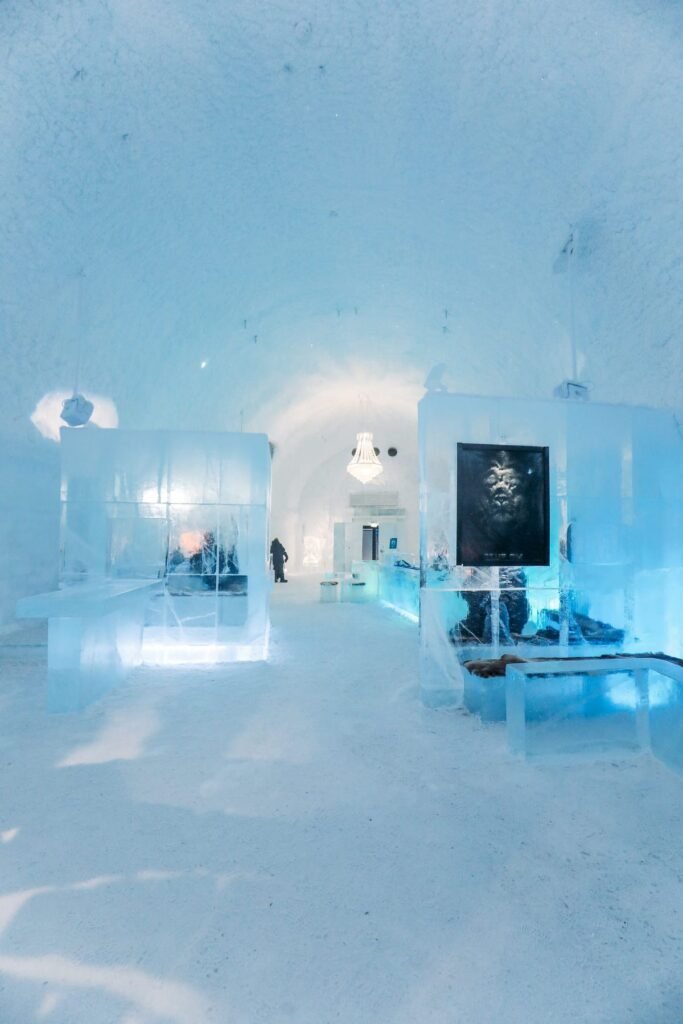
Part of the Icehotel’s global magic is that you can never visit the same room twice. Every spring, the hotel issues an open call to artists, sculptors, and designers worldwide. Out of hundreds of submissions, around 30 to 40 artists are selected to travel to Jukkasjärvi and hand-carve individual “Art Suites.”
One suite might feel like a sunken Atlantis, another like a futuristic space capsule, and another like a surreal forest filled with icy wildlife. Guests aren’t just staying in a cold room; they are sleeping inside a temporary, museum-grade work of art that will cease to exist in a matter of weeks.
4. The Magic of Constant -5°C
Stepping inside the Icehotel for the first time is surprisingly comfortable. Regardless of how cold it gets outside—where temperatures regularly drop to -30°C (-22°F)—the interior of the hotel remains locked at a stable -5°C to -8°C (23°F to 18°F).
The thick walls of packed snice insulate the interior from winds and extreme cold. Guests sleep on beds built of solid ice blocks, topped with thick wooden slats, insulating mattresses, and thermal-grade expedition sleeping bags resting on warm reindeer hides.
The Takeaway
The Icehotel endures as a bucket-list destination precisely because it rejects permanence. In an era where modern hospitality focuses on building structures designed to last centuries, Jukkasjärvi offers something rare: an unforgettable luxury experience that embraces the fleeting, cyclical rhythm of the natural world.