Every culture on earth celebrates. It is one of the most universal and most deeply human impulses we possess — the need to mark time, to honour the sacred, to grieve communally, to express joy in ways that ordinary language cannot contain. And yet the festivals that dominate travel conversations are almost always the same handful: Carnival in Rio, Oktoberfest in Munich, the Running of the Bulls in Pamplona. These are extraordinary events, deserving of every traveller’s consideration. But they are also, in 2026, among the most crowded, most commercialised, and most thoroughly documented experiences in the world. The festivals on this list are different. They are the ones that the genuinely curious traveller discovers when they move beyond the obvious — and they are, without exception, more powerful, more moving, and more transformative than anything a mainstream travel brochure has ever recommended.
Timkat, Ethiopia — January
Timkat is the Ethiopian Orthodox celebration of Epiphany, marking the baptism of Jesus in the River Jordan, and it is one of the most visually and spiritually overwhelming festivals anywhere on earth. Celebrated across Ethiopia every January, the ceremony centres on the Tabot — a replica of the Ark of the Covenant — which is carried from each church in a procession of priests robed in gold and white, surrounded by the deep, resonant chanting of ancient liturgical songs that have not changed in fifteen centuries. In Gondar, the former imperial capital, thousands of white-clad worshippers gather at the royal bath at dawn for a ceremony of such unaffected spiritual intensity that even secular visitors find themselves moved to silence. Timkat is not a performance for tourists. It is a living faith, and to witness it is to understand something about the depth and continuity of human devotion that no museum or textbook can convey.
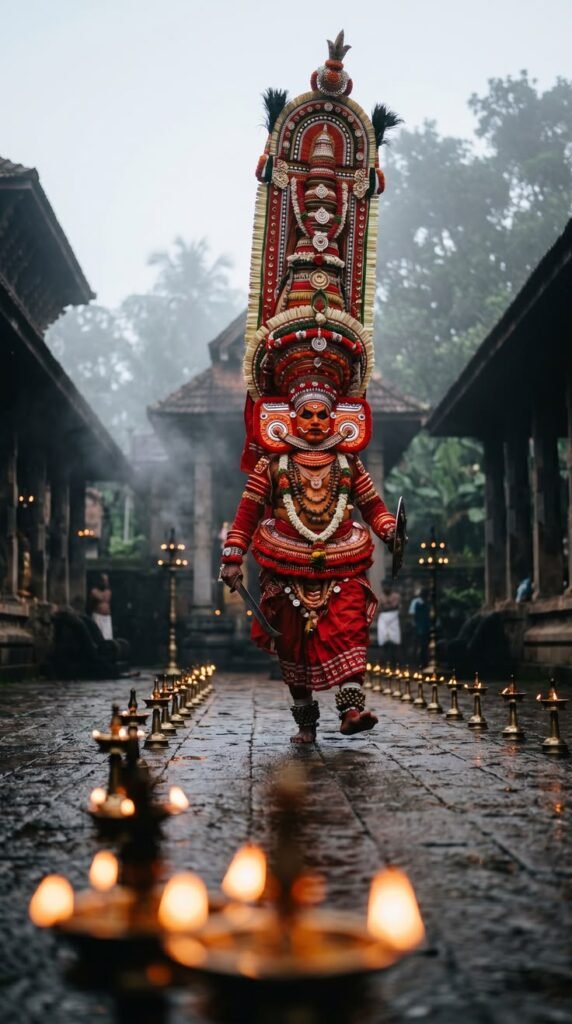
Onam, Kerala, South India — August or September
Onam is the harvest festival of Kerala, celebrated over ten days in late August or early September, and it is one of the most joyful, most colourful, and most genuinely communal celebrations in the world. The festival marks the mythical annual return of the beloved King Mahabali, and every home in Kerala is decorated with an intricate floral carpet — the Pookalam — made fresh each morning from dozens of varieties of flowers arranged in increasingly elaborate concentric patterns. The Vallamkali snake boat races, in which crews of over a hundred rowers power enormous decorated serpent-shaped boats across the backwaters of Alleppey, are a spectacle of collective human effort and rhythm so extraordinary that they feel less like a race and more like a piece of living music. Onam is a festival that asks nothing of you except your presence and your willingness to be delighted, and it delivers on that bargain completely.
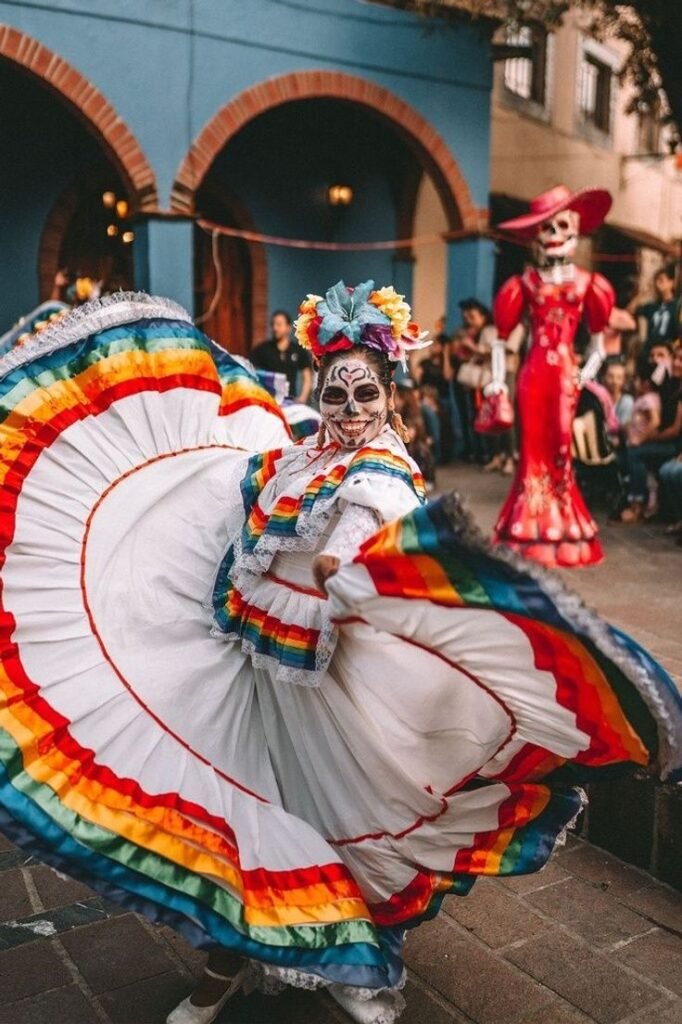
Día de los Muertos, Mexico — November 1–2
No festival on this list has been more misrepresented by popular culture than Día de los Muertos, the Mexican Day of the Dead. It is not a mournful occasion. It is not the Mexican equivalent of Halloween, despite sharing a calendar proximity. It is, in fact, one of the most life-affirming celebrations in the world — a two-day festival in which the dead are welcomed back to visit the living, and families gather at candlelit gravesides adorned with marigold flowers, food offerings, photographs, and personal objects to spend time in the company of those they have lost. In Oaxaca and Michoacán, the celebrations are most profound — the cemeteries glow with thousands of candles, the smell of copal incense fills the night air, and the boundary between grief and gratitude, between loss and love, dissolves in a way that leaves most visitors permanently changed in their own relationship with mortality and memory.
Naadam, Mongolia — July
Naadam is Mongolia’s national festival, held every July across the country and most spectacularly in Ulaanbaatar, celebrating the three traditional sports of the Mongolian nomad: wrestling, horse racing, and archery. But to describe Naadam purely in terms of its athletic programme is to miss everything that makes it extraordinary. It is a celebration of an entire way of life — of the vast grassland steppe, of the horse as partner and symbol, of a nomadic culture that has survived for millennia against every force of modernity and geopolitical change that has attempted to erase it. The child jockeys who ride the racehorses across the open steppe are between five and thirteen years old. The wrestlers wear traditional costume unchanged for centuries. The archers use techniques passed from father to son across generations too numerous to count. Naadam is alive in a way that few cultural events in the modern world still manage to be.
“The world’s greatest festivals are not entertainment. They are invitations — to step outside your own story for a moment and stand inside someone else’s, with humility, wonder, and the understanding that human joy takes more forms than you had previously imagined.”
The festival as the truest form of travel
What every celebration on this list offers, beyond the spectacle and the sensory overwhelm, is something that travel at its finest has always promised and rarely so completely delivered: the experience of genuine belonging to something larger than yourself. A festival strips away the tourist dynamic. When ten thousand people are dancing, grieving, racing, or praying together, there is no insider and no outsider — there is only the shared human moment, ancient and immediate at once, that reminds you why you left home in the first place. Plan around these dates. Book early. Arrive with respect and leave your assumptions at the door. The world’s most extraordinary celebrations are not on the brochure. They are on the calendar, waiting for the traveller who is paying attention.